The Unspoken Uniform: How Consistent Leather Choices Quietly Define Who You Are
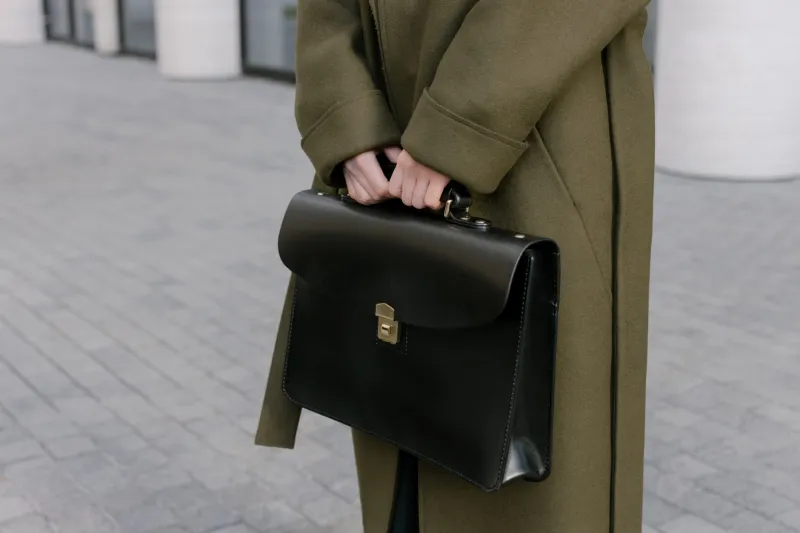
Consider the people in your professional and personal orbit whose visual identity feels entirely settled. The partner who has carried the same style of dark leather portfolio for fifteen years. The executive whose tan calfskin belt and matching watch strap appear with the reliability of a signature. The colleague whose structured black bag arrives in every meeting before she does, announcing a particular quality of preparation and intention.
These individuals are not necessarily conscious of the signal they are sending. But they are sending it—clearly, consistently, and with a precision that no spoken declaration could match.
The leather we choose to carry, and the degree to which we choose it deliberately and repeatedly, functions as one of the most legible forms of personal branding available to the modern American professional. It communicates values, disposition, and self-concept without requiring a single word of explanation.
The Psychology of Consistent Choice
Behavioral researchers have long understood that consistency in personal presentation—the deliberate repetition of visual choices across time and context—signals a particular kind of self-knowledge. It suggests that the individual in question has resolved certain questions about identity and is no longer actively auditioning alternatives. This resolution reads, to observers, as confidence.
In the context of leather goods specifically, this consistency operates on multiple registers simultaneously. The person who cycles through a new bag every season communicates something different from the person who carries the same exceptional piece for a decade. The former may project dynamism; the latter projects certainty. And in the rooms where consequential decisions are made—boardrooms, courtrooms, negotiating tables—certainty tends to carry more weight.
"I stopped buying new bags when I realized I was always reaching for the same one," says a Washington, D.C.-based policy consultant who has carried a single dark cognac leather tote for the better part of eight years. "Once I understood that the consistency itself was communicating something, I started being much more deliberate about the pieces I allowed to represent me."
This deliberateness—the conscious construction of a leather identity rather than its accidental accumulation—is the distinction between style and signature.
Color as Character: What Your Leather Palette Reveals
Among the most readable elements of a leather signature is color. Not because color carries fixed, universal meaning, but because the colors we return to habitually reflect genuine aspects of temperament and self-presentation.
The American professional who consistently gravitates toward black leather—clean, unembellished, formally correct—is making a statement about the primacy of function and the value of understatement. Black leather says: I am here for the work. It deflects attention from the accessory toward the person carrying it, which is, in many contexts, precisely the point.
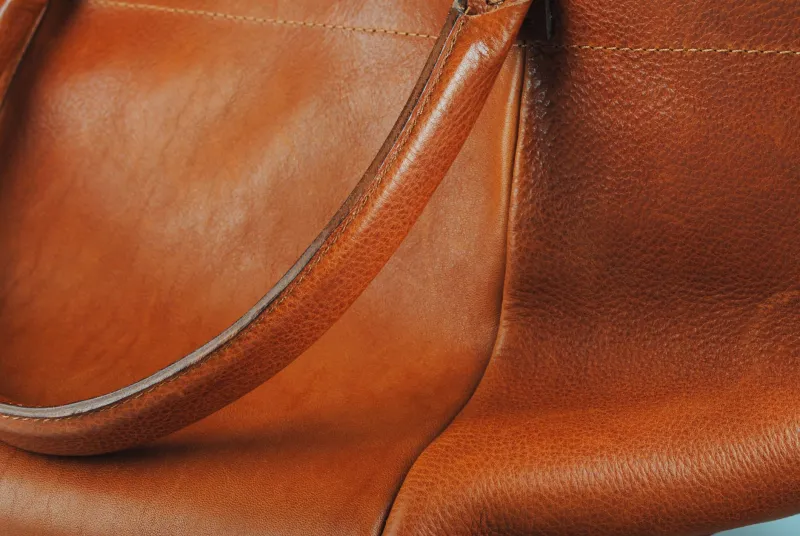
Cognac and tan, by contrast, carry warmth and approachability without sacrificing authority. These tones suggest an individual who has considered their presentation carefully but is not enslaved to convention—someone who understands the rules well enough to bend them with grace. In American business culture, particularly in creative industries, law, and finance, the warm-toned leather portfolio or bag has become a shorthand for a particular kind of confident sophistication.
Deep burgundy and oxblood tones occupy a more specific register: they signal connoisseurship. A person who selects these colors for their primary leather goods has typically moved past the introductory phases of style development and arrived at something more personal and considered. The choice is not obvious, but it is not eccentric. It sits precisely at the intersection of tradition and individuality.
Natural, undyed leathers—tan pull-up, naked vegetable-tan—communicate a different set of values entirely. They are an embrace of process, of visible aging, of the understanding that the piece will become more itself over time. Individuals drawn to these materials tend to think in longer time horizons than their peers.
Finish and Texture: The Details That Distinguish
Beyond color, the finish and texture of leather choices add further dimension to a personal signature. Smooth, high-gloss surfaces project precision and formality. Matte, pebbled, or full-grain textures with visible natural markings suggest a preference for authenticity over perfection—a willingness to let the material be what it is rather than what it has been processed to resemble.
In American professional culture, where the pendulum has swung decisively away from ostentatious branding and toward quiet quality, the understated full-grain piece with no visible logo has emerged as the most credible signal available. It says, to those equipped to read it: I know enough not to need the label.
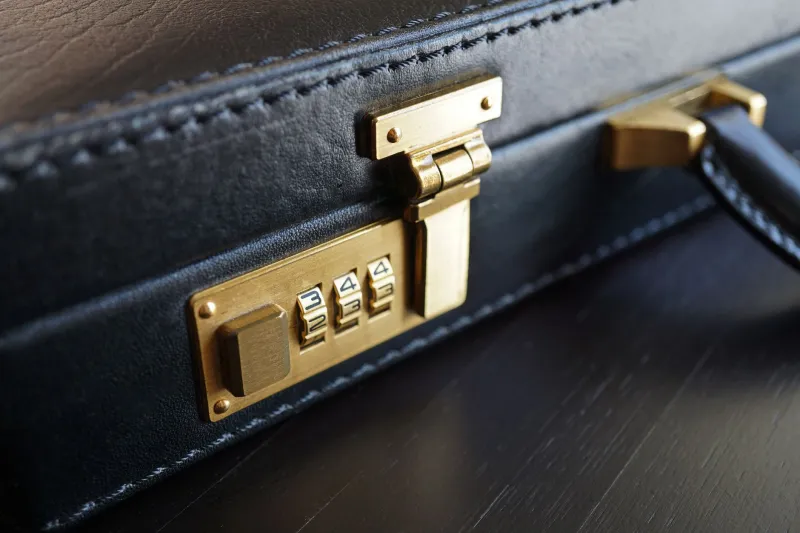
Hardware selection completes the picture. Brushed gold suggests warmth and a certain ease with tradition. Polished silver communicates precision and modernity. Aged brass—the hardware choice of the most committed leather connoisseurs—signals a comfort with time, with patina, with the idea that the best things improve rather than decay. Matte black hardware, increasingly common in American leather goods, projects an almost architectural restraint.
None of these choices is objectively superior. Each is simply legible—part of a visual vocabulary that observant people read continuously and largely unconsciously.
Building a Leather Identity with Intention
For those who have not yet arrived at a settled leather signature—or who sense that their current choices do not fully reflect who they have become—the process of deliberate construction begins with honest self-assessment rather than trend consultation.
The relevant questions are not what is fashionable but rather what do I consistently reach for, and why? What colors appear repeatedly in the leather goods I have owned longest and loved most? What finishes feel most authentically aligned with the way I move through the world? What do I want the first impression of my bag or portfolio to communicate before I have said anything at all?
From those answers, a signature emerges—not as an imposition but as a recognition. The most compelling personal styles in leather are not constructed from the outside in. They are discovered from the inside out and then expressed with increasing clarity and conviction over time.
"The clients who come to us knowing exactly what they want are almost always the most interesting," notes a bespoke leather goods maker based in Nashville whose clientele spans the American South and both coasts. "They've done the internal work. They're not asking us to tell them who they are. They're asking us to help them express it more precisely."
That precision—the alignment between inner conviction and outward expression—is what a true leather signature achieves. It is not merely a style choice. It is, in the deepest sense, a form of self-knowledge made visible. And in a world saturated with noise and novelty, the quiet authority of a consistent, considered leather identity remains one of the most powerful personal statements available.
You need not announce it. It announces itself.