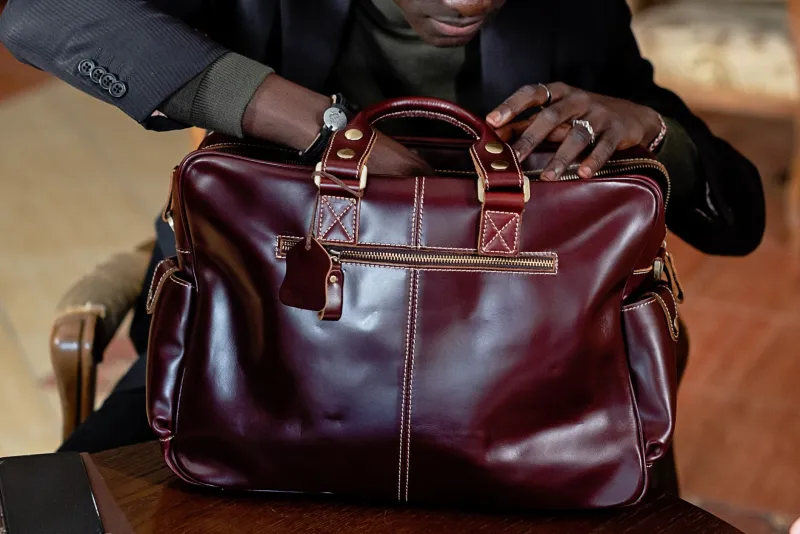
The Rolling Studio: How America's Most Devoted Car Enthusiasts Are Reclaiming the Leather Interior
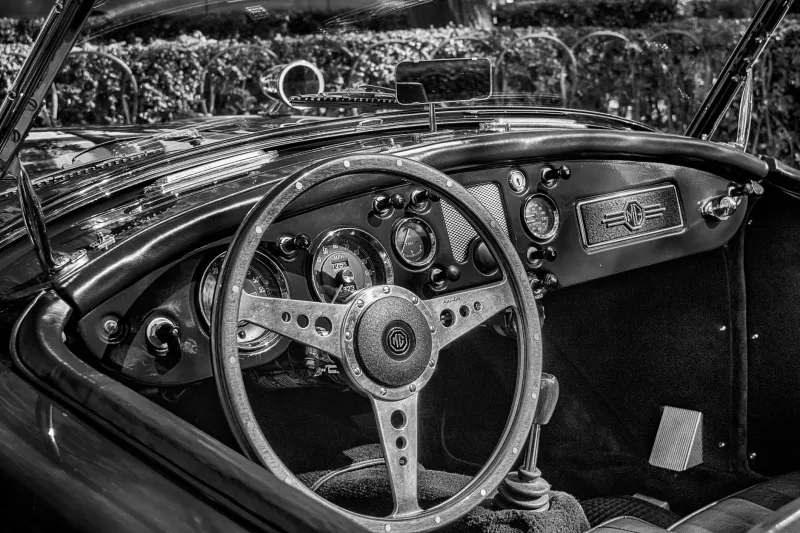
The Rolling Studio: How America's Most Devoted Car Enthusiasts Are Reclaiming the Leather Interior
There is a particular kind of silence that settles over a well-appointed automobile before the engine turns. It is the silence of considered choices — of stitching laid down by a craftsman's hand, of hides selected for their grain and their promise of graceful aging, of a steering wheel that communicates not merely direction but intention. For a generation of American car enthusiasts who have grown weary of mass-produced interiors and disposable trim packages, that silence has become the point.
They are not restorers in the traditional sense, though many of them work with classic vehicles. They are, more precisely, curators — individuals who approach the cockpit of an automobile with the same discernment they bring to building a wardrobe of enduring leather goods. The dashboard, the door panels, the gear shift, the seats: each surface is an opportunity, and none is wasted.
The Interior as Personal Statement
The parallel between a luxury leather wardrobe and a leather-appointed automobile interior is not merely aesthetic. It is philosophical. Both demand patience. Both reward long-term thinking over short-term convenience. And both reflect a willingness to invest in objects that will outlast the trends of the moment and deepen in character with every year of use.
Consider the steering wheel. In the current era of synthetic wraps and injection-molded grip surfaces, a hand-stitched leather wheel cover represents a deliberate departure from the ordinary. Craftsmen who specialize in automotive leather work — a discipline that draws on the same traditions as fine saddlery and bespoke accessories — speak of the wheel as the driver's most intimate point of contact with the machine. The leather chosen for it must be supple enough to offer grip without bulk, durable enough to withstand heat and handling, and fine enough to develop a patina that tells the story of every mile traveled.
"A steering wheel is touched thousands of times a year," notes one restoration specialist based in the American Southwest who has spent two decades refining his approach to automotive leather. "You want something that gets better with that contact, not worse. The right hide will darken at the grip points, soften where your palms rest, and still look intentional twenty years from now."
From Cockpit to Wardrobe: A Shared Standard
What distinguishes the most serious practitioners of automotive leather work is not simply their technical skill — it is their insistence on coherence. A collector who commissions a full interior restoration does not select materials in isolation. The choice of leather for the seats informs the choice for the door panels. The thread color on the gear shift gaiter echoes the stitching on the center console. The result is not a car that has been "detailed" but one that has been composed, much as a well-dressed individual composes an outfit from pieces that belong to the same aesthetic conversation.
This coherence extends, for many enthusiasts, beyond the vehicle itself. Several collectors interviewed for this piece described their automotive interiors as direct extensions of their personal leather philosophy — the same standards they apply to a briefcase or a wallet applied now to a 1968 Porsche or a vintage American muscle car. They source hides from the same tanneries. They consult the same craftsmen. They ask the same questions about vegetable tanning, full-grain selection, and long-term durability.
"I wear the same quality of leather that I drive in," one collector from the Pacific Northwest explained simply. "It would feel inconsistent to be any other way."
The Craft Behind the Cockpit
The actual work of restoring or upgrading an automotive interior in fine leather is among the most demanding disciplines in the broader world of leather craftsmanship. Unlike a flat panel or a simple accessory, car interiors present compound curves, structural constraints, and surfaces that must flex, compress, and breathe across extreme temperature ranges. A seat that looks beautiful in a California winter must perform equally well in a Texas summer.
Master craftsmen in this field often describe their work as closer to sculpture than to tailoring. Patterns must be drafted from scratch for each vehicle. Seams must be planned not only for appearance but for structural integrity. And the leather itself must be selected with an understanding of how it will move — how it will stretch across a bolster, how it will hold a pleat, how it will respond to the particular demands of a given cockpit's geometry.
The best of these craftsmen maintain waiting lists measured in months, not weeks. Their clients do not rush them. Patience, after all, is the first requirement of anyone serious about quality.
The Heirloom Logic of the Automobile
There is a deeper current running through this movement, one that connects it to broader conversations about material culture and lasting value. The automobile, for much of the twentieth century, was treated as a consumable — a product to be traded in, upgraded, and discarded on a two- or three-year cycle. A growing number of Americans are pushing back against that logic, choosing instead to invest in vehicles they intend to keep, to maintain, and ultimately to pass on.
A properly restored leather interior is central to that ambition. Unlike synthetic materials that crack, fade, and degrade within a decade, full-grain leather — properly conditioned and conscientiously maintained — will outlast the mechanical components it surrounds. There are interiors from the 1950s and 1960s, maintained with the same care one might give to a cherished pair of dress shoes, that remain supple and beautiful today. They are not relics. They are arguments.
Arguments for the enduring value of craft over convenience. For the wisdom of choosing materials that improve rather than deteriorate. For the particular satisfaction of sitting inside something that was made — genuinely, deliberately made — for the long term.
Driving With Intention
The Sunday driver of popular imagination is a figure of leisure, someone who takes to the road without urgency or destination. But the enthusiasts redefining the American automotive interior bring a different quality to that image. They are deliberate. They are exacting. And they understand, perhaps better than most, that the objects with which we surround ourselves — whether worn on the body or wrapped around a steering column — are never merely functional.
They are declarations. Of taste, of standard, of the kind of person one intends to be.
In that sense, the cockpit and the wardrobe have always been the same conversation. It simply took a generation of truly discerning drivers to remind us.