Before Monday Arrives: The Leather Care Ritual That Separates the Intentional from the Incidental
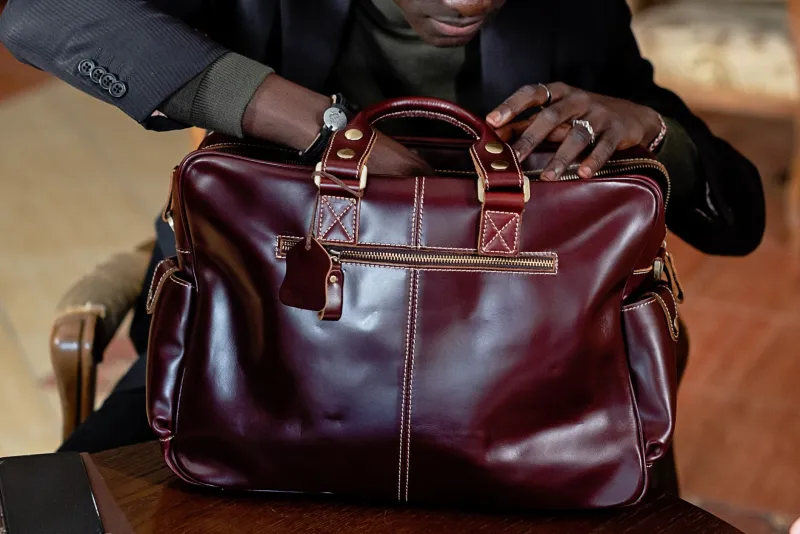
There is a particular quality of stillness that descends on Sunday evenings — a liminal hour that belongs neither to rest nor to work, but to something rarer: preparation. For a specific breed of American professional, that hour is not spent scrolling or unwinding in the conventional sense. It is spent at a table, with a soft cloth, a tin of conditioner, and the leather goods that will carry them through the week ahead.
This is not mere maintenance. It is, for those who practice it consistently, a philosophy made tangible.
The Psychology of the Prepared Object
Behavioral psychologists have long noted the relationship between environmental order and cognitive readiness. When we take deliberate care of the objects in our immediate world, we are not simply preserving their condition — we are rehearsing intentionality. The act of preparation, repeated and ritualized, trains the mind to approach what follows with the same degree of attention.
Leather, uniquely among materials, responds visibly to that care. A briefcase that has been properly conditioned and buffed does not merely look different from one that has been neglected — it carries itself differently. The surface is supple rather than stiff, the color deepens with a warmth that synthetic materials cannot replicate, and the overall impression is one of quiet authority. For the professional who carries it, that transformation is not incidental. It is the point.
Dr. Caroline Marsh, an organizational psychologist based in Chicago who works with senior executives, has observed this pattern among her clients. "The ritual matters as much as the result," she notes. "People who build consistent preparation habits — whether that's reviewing their calendar, laying out their clothes, or caring for the objects they rely on — report a measurable reduction in decision fatigue at the start of the week. They've already made the choice to show up fully. Everything else follows from that."
What the Ritual Looks Like in Practice
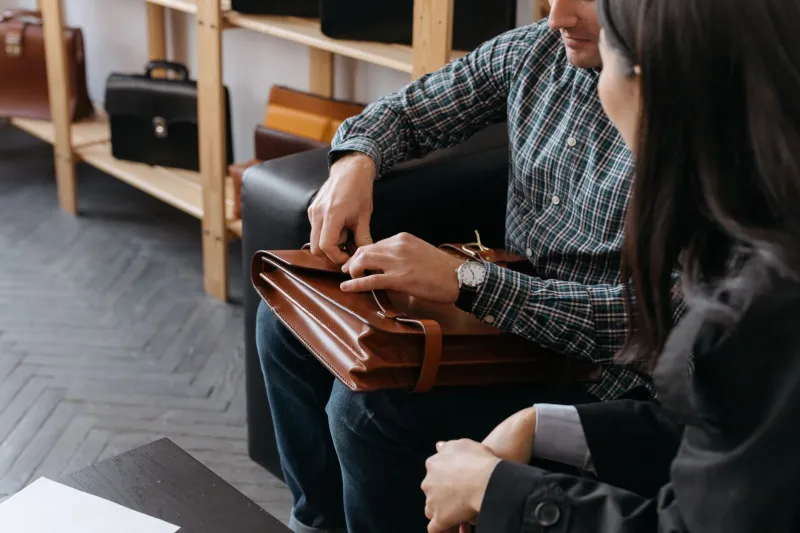
For Marcus T., a corporate attorney in Atlanta who has maintained his leather Sunday ritual for nearly a decade, the process takes approximately thirty minutes and unfolds with the precision of a legal brief. He begins by emptying his briefcase entirely — a habit he describes as both practical and symbolic. "You see what you've been carrying," he says. "Literally and otherwise."
From there, he wipes down the exterior with a barely damp cloth to lift surface dust, applies a thin layer of high-quality leather conditioner in circular motions, and allows it to absorb before buffing to a low sheen. His dress belt and wallet receive the same treatment. By the time he finishes, his Sunday evening has acquired a sense of closure — and his Monday morning carries a sense of momentum.
In Seattle, entrepreneur Danielle K. has adapted the ritual to suit her own aesthetic. A collector of structured leather totes, she rotates three bags across her working week and devotes Sunday evenings to evaluating each one. "I'm not just conditioning the leather," she explains. "I'm deciding what I need this week. What I'm walking into. The bag I choose tells me something about how I'm approaching the next five days."
These are not isolated cases. Across American cities — from the financial corridors of New York to the startup corridors of Austin — a quiet community of professionals has arrived at the same conclusion: the way you treat your tools before you use them is a direct expression of how seriously you take the work itself.
The Craft Behind the Care
Understanding why the ritual matters requires understanding what leather is and what it demands. Unlike synthetic materials engineered for low maintenance, full-grain and top-grain leathers are living surfaces — derived from natural hide, they breathe, absorb moisture, and respond to environmental conditions over time. Without regular conditioning, the natural oils within the hide deplete, leading to dryness, cracking, and a loss of the structural integrity that defines a quality piece.
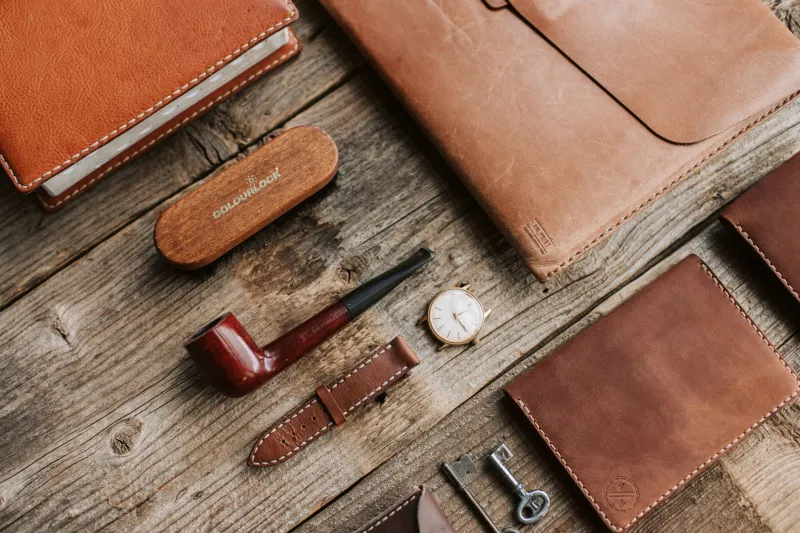
The tools required are neither expensive nor complex, but they reward knowledge. A quality leather conditioner — one that uses natural waxes or oils rather than petroleum-based compounds — should be the foundation of any care regimen. Applied sparingly and worked into the grain with a soft cloth, it replenishes lost moisture and maintains flexibility. A separate finishing wax or cream polish, used after conditioning, provides surface protection and enhances depth of color. For hardware, a dry cloth is sufficient; chemical cleaners should be avoided entirely.
The frequency of this care depends on how often the piece is used and the climate in which it lives. In drier regions such as the American Southwest, monthly conditioning may be warranted. In more temperate climates, every six to eight weeks is typically sufficient — though the Sunday practitioner often finds that the ritual itself, rather than strict necessity, governs the schedule.
Intention as a Competitive Advantage
It would be easy to dismiss this as the affectation of the overly particular. It is, in fact, the opposite. The individuals who have adopted this habit are not defined by an obsession with objects — they are defined by an understanding that objects, when chosen carefully and maintained deliberately, become extensions of one's standards.
There is a reason that the most enduring leather goods in American culture — the worn-in briefcase of the seasoned litigator, the perfectly creased wallet carried for fifteen years — accrue meaning over time rather than losing it. They are records of consistency. They document, in the language of patina and wear, a life lived with intention.
The Sunday ritual is, at its core, an act of authorship. It says: I know what I am carrying into this week, and I have prepared it accordingly. In a culture that frequently mistakes busyness for purpose, that distinction is not trivial. It is, for those who have discovered it, the quiet edge that precedes every other advantage.
Beginning the Practice
For those who have yet to establish this habit, the entry point is simpler than it appears. Choose one leather piece — the bag you carry most frequently, or the belt that anchors your daily dress — and commit to caring for it before the next week begins. The investment in time is modest. The return, measured not in years but in decades, is considerable.
Leather Iconic has always held that the finest pieces are not simply purchased — they are cultivated. The Sunday ritual is where that cultivation begins: not in a store, not in a workshop, but at a quiet table on a still evening, in the deliberate hands of someone who understands that preparation is never wasted.