Built for One: Why America's Most Intentional Dressers Are Turning to Bespoke Leather

Built for One: Why America's Most Intentional Dressers Are Turning to Bespoke Leather
There is a particular kind of confidence that cannot be purchased off a shelf. It does not arrive in a branded shopping bag, nor does it announce itself with a recognizable logo. It is the quiet assurance of a person who carries something made specifically — and exclusively — for them. Across the United States, a growing cohort of high-achieving professionals is discovering this truth through the world of bespoke leather goods, and the implications for how Americans think about personal style are profound.
The Limits of Ready-Made Prestige
For decades, the American luxury market operated on a straightforward proposition: pay a premium price, receive a premium product. Brand heritage and recognizable design served as proxies for quality, and consumers were content — or at least accustomed — to selecting from what was offered. That model still holds considerable power. But among a particular class of style-conscious Americans, something has shifted.
These are not consumers who lack access to established luxury houses. Many own pieces from the most respected names in the industry. What they have begun to notice, however, is the ceiling that ready-made goods impose. A briefcase designed to appeal to thousands cannot, by definition, be designed for one. A wallet produced at volume carries with it the implicit message that its owner is interchangeable with every other owner. For professionals who have spent careers building something singular — a practice, a company, a reputation — that message sits uneasily.
The response, increasingly, is to commission rather than purchase.
The Psychology of the Purpose-Built Object
To understand why bespoke leather resonates so deeply, one must consider what a leather piece actually does in the daily life of its owner. A portfolio sits on a conference table in full view of clients. A card holder is produced at precisely the moment a first impression is being formed. A travel wallet accompanies its owner through airports, hotel lobbies, and foreign cities. These are not background objects. They are, in a very real sense, extensions of the person carrying them.
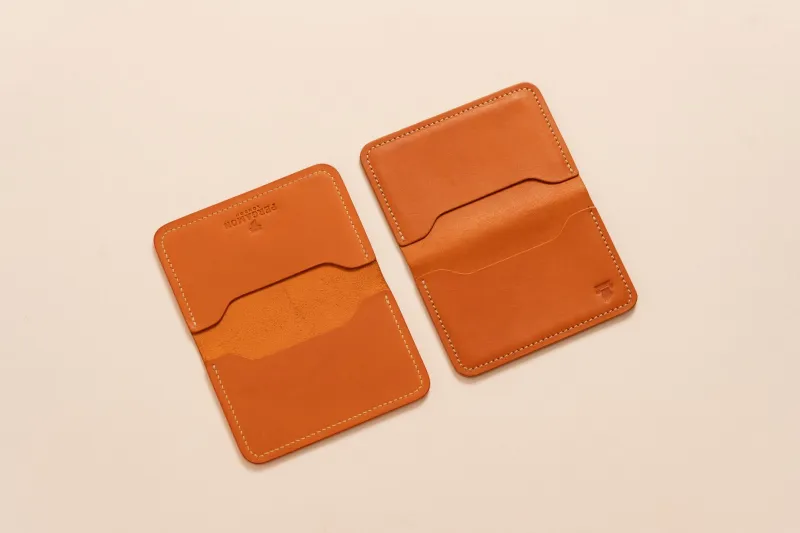
When that object has been built around your specific dimensions, your habitual organization, your preferred weight and texture — when it bears your initials pressed into the hide by a craftsperson who corresponded with you for weeks before cutting a single piece of leather — it carries a different energy entirely. It is not merely a fine object. It is a considered one. And that distinction, subtle as it may appear from the outside, is felt immediately by the person who carries it.
Artisans who work in the bespoke space speak of clients who describe the commissioning process itself as clarifying. The questions required to build a truly custom piece — How do you organize your cards? Do you prefer a single large compartment or structured divisions? What does your hand feel like after a long day of carrying? — are, in a sense, questions about how a person actually lives. Answering them with intention is its own form of self-knowledge.
The Commission as Ritual
The bespoke leather process, at its finest, unfolds over weeks or months. Initial consultations establish the functional parameters of the piece — its dimensions, its internal architecture, its intended daily use. From there, discussions turn to materials: the origin and grade of the hide, the finish, the weight. Hardware is selected. Thread color is considered. And then, often, comes the question of personalization — a monogram, a date, an inscription on the interior that no one but the owner will ever read.
This extended process stands in deliberate contrast to the immediacy of modern retail. In a culture that has optimized for speed and convenience, choosing to wait — to participate in the slow construction of something — is itself a statement. It signals that the outcome matters enough to be worth the patience. That is a disposition more commonly associated with the commissioning of architecture or the selection of a tailor than with the acquisition of an accessory. That bespoke leather now occupies the same psychological register speaks to how seriously its adherents regard the category.
For many clients, the completed piece arrives not merely as a product but as a record. The date of commissioning, the name of the artisan, the specific hide selected from a particular tannery — these details accumulate into a provenance that mass production cannot manufacture. Decades from now, that portfolio or that briefcase will carry the full weight of its history. That is not a trivial thing.
What Artisans Observe
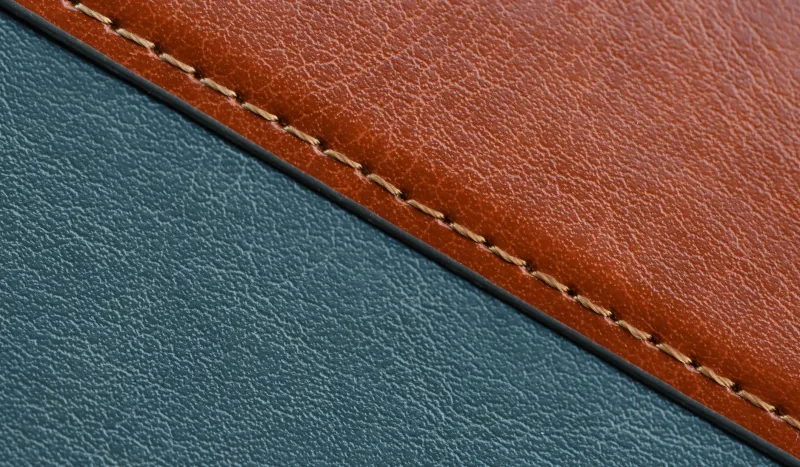
Those who practice the craft of bespoke leatherwork describe a clientele that is notably different from the typical luxury consumer. They tend to arrive having already done considerable research. They ask specific questions about tanning methods, about the behavioral differences between full-grain and top-grain hides, about how a particular leather will age under specific conditions of use. They are not seeking to be sold to. They are seeking a collaborator.
The relationship that develops between a client and their artisan is, in the best cases, an ongoing one. A person who commissions a custom card holder may return for a travel document case. A briefcase client may later request a desk accessory set. Each piece builds on the last, informed by how the previous object performed and evolved. Over time, a coherent personal collection takes shape — one unified not by a brand's seasonal vision but by a single individual's evolving life.
This is, it bears noting, precisely how the great personal collections of earlier American generations were assembled. Not through single transactions but through sustained relationships with makers who understood their clients intimately.
The Modern Expression of American Luxury
There is something distinctly American about the bespoke leather movement as it exists today. It draws on the nation's deep tradition of valuing workmanship and individual enterprise, while simultaneously rejecting the notion that luxury must be defined by European heritage or institutional prestige. The artisans producing the finest custom leather goods in the United States today work out of studios in cities and small towns alike — in New York and Nashville, in Portland and Philadelphia — and they bring to their work a seriousness that needs no borrowed authority to validate it.
For their clients, the appeal is equally clear. In a world saturated with signals and status markers, the most powerful statement available may be the one that requires no explanation. A piece built for you, by name, to the precise specifications of your life, speaks a language that only you fully understand. That is not exclusivity in the conventional sense. It is something rarer: genuine singularity.
The leather piece you will never see coming is not the one in the window of a flagship boutique. It is the one that does not exist yet — the one being conceived, right now, in a conversation between a craftsperson and a client who has decided, finally, to own something truly their own.