Small Objects, Absolute Authority: The Invisible Leather Accessories That Define America's Most Accomplished
Small Objects, Absolute Authority: The Invisible Leather Accessories That Define America's Most Accomplished
There is a particular kind of confidence that requires no announcement. It does not arrive in a logo-covered tote or a hardware-laden clutch. It does not seek validation from a season's trend report or the approval of a street-style photographer. It arrives quietly — in the form of a slim card holder placed on a mahogany conference table, a key fob pulled from a jacket pocket with unhurried ease, a document sleeve opened without ceremony before a meeting that will reshape something significant. These are the leather pieces that never trend. They also never disappear.
America's most accomplished professionals have long understood something that the fashion industry is structurally incapable of acknowledging: the accessories that communicate the deepest authority are, almost without exception, the ones designed to be invisible.
The Tyranny of the Obvious
Fashion, by its very nature, is a system built on visibility. Runways exist to project. Campaigns exist to saturate. Logos exist to be recognized. And for a certain kind of consumer — one still in the process of constructing an identity, still assembling the vocabulary of success — conspicuous markers serve a purpose. They signal arrival.
But arrival is not the same as establishment. And this distinction, subtle as it may seem, is the entire philosophical difference between a luxury leather good purchased for its emblem and one chosen for its construction.
The executives who have already arrived — the attorneys who have argued before appellate courts, the financiers whose names appear in annual reports rather than press releases, the architects whose buildings outlive their careers — these individuals stopped reaching for the obvious some time ago. What replaced it was not minimalism as an aesthetic trend. It was something older and more deliberate: the understanding that restraint, executed in fine leather, communicates more than any monogram ever could.
The Card Holder as Quiet Declaration
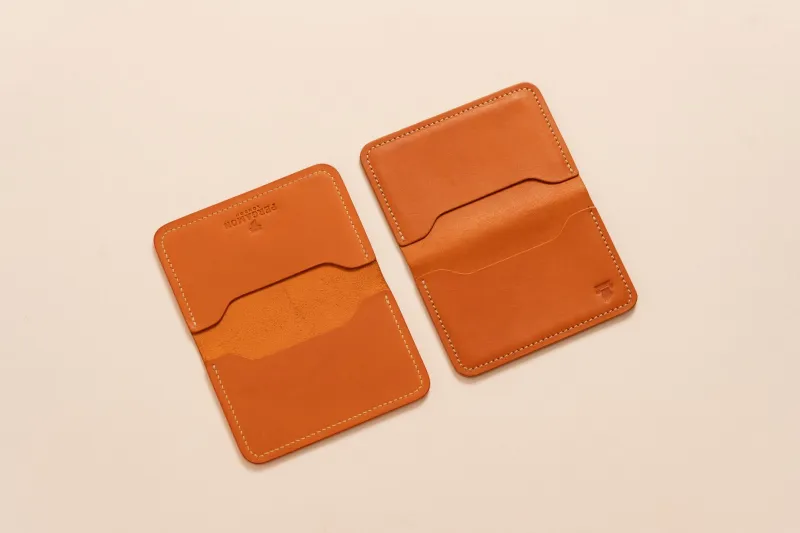
Consider the card holder. In an era of digital everything, the business card itself has become a statement of intentionality — a physical gesture in a contactless world. What carries that card matters accordingly.
A slim leather card holder, cut from a single piece of full-grain hide with tight, even stitching and no ornamentation beyond the quality of the material itself, performs a function that is simultaneously practical and deeply editorial. It says: the person who carries this has made a considered choice. Not a hurried one, not a default one, but a choice that reflects a coherent set of values — precision, permanence, proportion.
No one photographs a card holder for social media. No one's stylist selects one for a red carpet appearance. And yet, in the rooms where decisions of consequence are made — boardrooms in Chicago, law offices in Washington, private dining rooms in New York — this object circulates with remarkable consistency among those whose judgment is most trusted.
The Key Fob Nobody Talks About
The key fob occupies an even more invisible position in the wardrobe. It is, by definition, a transitional object — glimpsed briefly, pocketed immediately, never lingered over. Which is precisely why it reveals so much.
A key fob crafted from bridle leather or vegetable-tanned hide, shaped simply and finished cleanly, is a choice made entirely for the self. There is no audience for it. There is no social return on the investment. It exists purely as an expression of private standard — the standard one maintains when no one is watching, which is, ultimately, the only standard that matters.
This is the philosophy that has always distinguished the American professional class at its most refined from its merely wealthy counterpart. The latter buys for recognition. The former buys for coherence. A life assembled with coherence — where even the objects no one sees are chosen with care — projects an integrity that no amount of visible luxury can manufacture.
The Document Sleeve and the Grammar of Seriousness
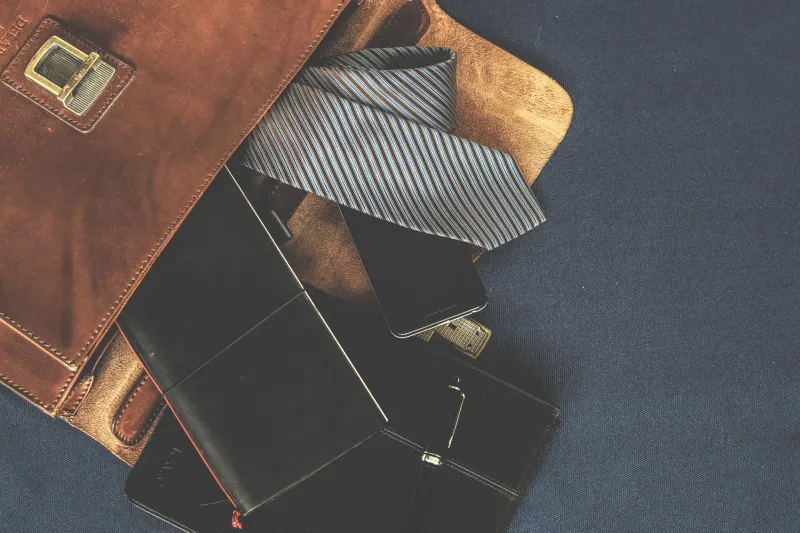
Perhaps no leather accessory is more thoroughly ignored by the fashion press and more consistently present in serious professional life than the document sleeve. Flat, unlined, unbranded — it is, to the untrained eye, almost aggressively unremarkable.
To those who use one, it is anything but.
A well-made leather document sleeve — the kind that holds a contract, a proposal, a set of architectural drawings, or a brief — communicates something the moment it is placed on a surface. It communicates that the person who carried it in treats the contents with the same respect they treat their own time: seriously, deliberately, without excess. The leather protects not because it must, but because protection is a value, not an afterthought.
In American professional culture, where so much is performed and projected, the document sleeve is one of the few objects that simply is. It does not perform. It functions. And in functioning beautifully, without fanfare, it becomes something more than utilitarian — it becomes iconic in the truest sense of the word.
Why These Pieces Never Trend — and Why That Is Entirely the Point
The fashion cycle is a mechanism designed to generate desire through novelty. What was essential last season becomes obsolete this one. The system depends on dissatisfaction — on the consumer's perpetual sense that what they own is not quite enough, not quite current, not quite right.
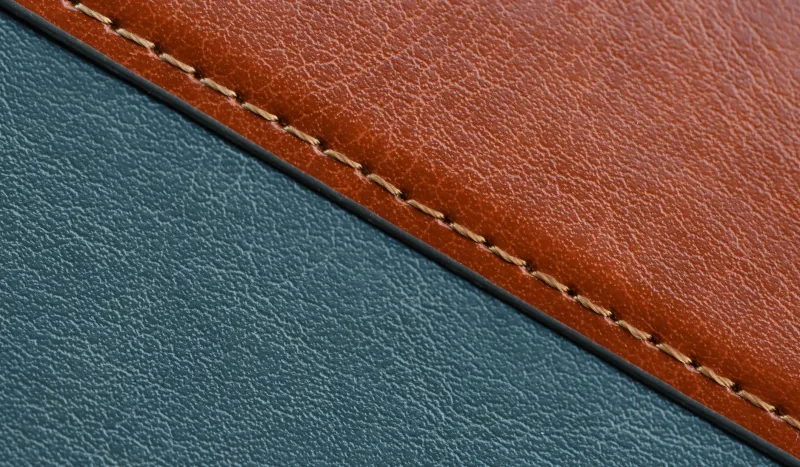
The slim card holder, the plain key fob, and the unadorned document sleeve exist entirely outside this system. They do not become obsolete. They become better. The leather deepens in color. The edges soften imperceptibly. The stitching holds, year after year, with the quiet reliability of something built to outlast fashion entirely.
This is precisely why they never appear on a runway. They have nothing to sell to a system that depends on turnover. They are, in the most literal sense, anti-fashion — and in being so, they represent the highest expression of what fine leather goods can be.
The Wardrobe That Doesn't Need to Announce Itself
To build a wardrobe around these objects is to make a philosophical commitment. It is to accept that the most powerful things you own will go largely unnoticed by everyone except the people whose notice is worth having. It is to trust that a card holder pulled from a jacket pocket can communicate, in a single gesture, a set of values that no logo-emblazoned accessory could approximate.
At Leather Iconic, this is the conviction that animates everything we consider worth making, wearing, and passing on. The pieces that define a life of genuine accomplishment are rarely the ones that announce themselves. They are the ones that simply, precisely, and permanently are — present in every room that matters, invisible to everyone who isn't paying attention, and absolutely unmistakable to everyone who is.
The runway will never feature them. The powerful will never stop carrying them. And that, in the end, is the point entirely.