Miles That Matter: The Case for Leather as the Ultimate Travel Companion
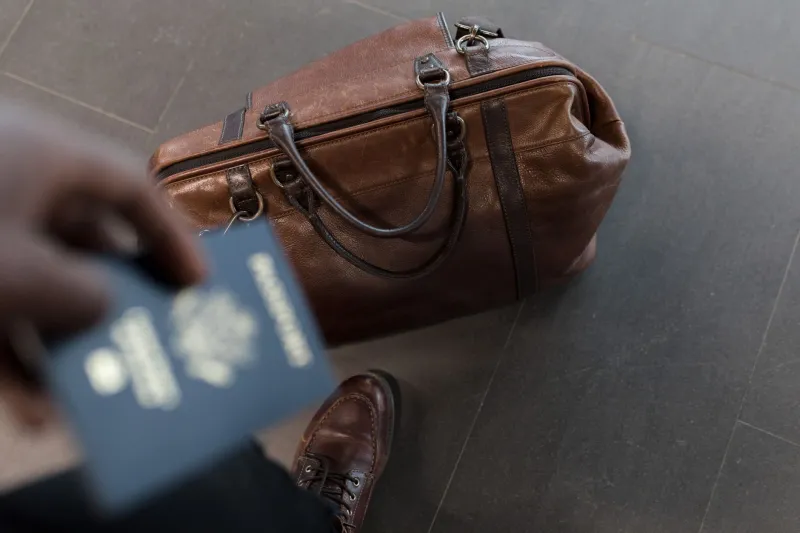
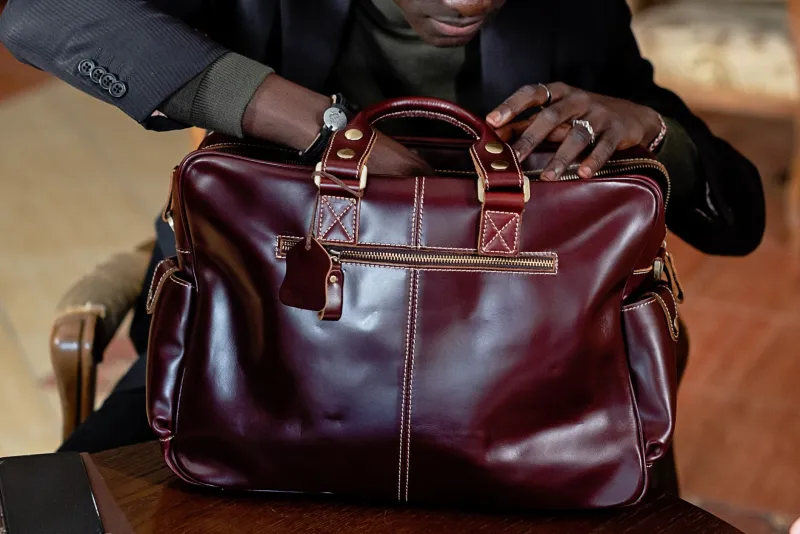
There is a particular moment at any major American airport — O'Hare, LAX, Hartsfield-Jackson — when the baggage carousel begins its slow, indifferent rotation and a procession of near-identical nylon bags emerges, each one a variation on the same theme of forgettable utility. And then, occasionally, something different appears: a structured leather duffel, its surface burnished by seasons of use, its brass hardware catching the terminal light with quiet authority. The traveler who claims it does not rush. There is no urgency in the gesture. The bag, after all, is unmistakable.
This scene, once rare, is becoming more common. Across the United States, a cohort of serious travelers — professionals, collectors, and those who have simply grown impatient with disposability — are reconsidering what they carry and why. The conclusion many are reaching is the same one that generations before them already understood: leather is not merely a material. It is a philosophy of travel.
The Problem with Synthetic: Convenience at a Cost
The rise of high-performance nylon and polycarbonate luggage was, in its time, a genuine innovation. Lightweight, water-resistant, and affordable, synthetic travel goods democratized mobility in ways that served millions of Americans well. But convenience, pursued without consideration, eventually reveals its limitations.
Synthetic luggage does not age — it deteriorates. The zipper that frays, the wheel housing that cracks, the fabric that pills and scuffs: these are not signs of a life well-traveled. They are reminders that the piece was never designed to last. Most synthetic bags are engineered with a replacement cycle in mind, a quiet admission built into the very fibers of their construction.
For the traveler who logs meaningful miles — whether for business, leisure, or the kind of deliberate exploration that blurs the two — this equation eventually stops making sense. The cost of replacing a mid-range synthetic bag every three to five years begins to rival the investment in a single, well-constructed leather piece. And the leather piece, unlike its synthetic counterpart, does not simply endure. It improves.
What Patina Actually Means
The word patina is used frequently in discussions of fine leather, sometimes to the point of abstraction. It is worth pausing to consider what it actually describes.
Patina is the visible record of contact between a material and the world. In leather, it manifests as a deepening of color in areas of frequent touch, a subtle softening of texture, a luminosity that factory-fresh hides do not possess. It is, in the most literal sense, a biography written in surface. Every flight, every road trip, every hotel corridor and national park trail leaves its mark — not as damage, but as evidence.
This is the distinction that separates leather travel goods from every alternative: they do not resist experience. They absorb it. A full-grain leather holdall carried across the American Southwest for a decade looks nothing like it did when it left the workshop, and that transformation is precisely the point. The bag becomes specific. It becomes yours in a way that no nylon carry-on ever could.
The Cultural Romance of the Open Road, Revisited
America has always understood travel as something more than logistics. From the Steinbeck-era romanticization of Route 66 to the contemporary resurgence of road-trip culture among younger generations seeking alternatives to algorithmic tourism, the open road carries an emotional charge that is deeply embedded in the national imagination.
Leather, as a material, is native to that tradition. The saddlebags of westward expansion, the traveling cases of early twentieth-century rail passengers, the duffel bags of mid-century adventurers — leather has accompanied Americans through the most consequential movements in the country's story. To carry a leather bag today is to participate, consciously or not, in that lineage. It is to suggest that the journey is worthy of the same seriousness that the destination receives.
This is not nostalgia for its own sake. It is the recognition that certain materials carry cultural memory, and that choosing them is a form of intention — a declaration that travel is not merely something you do, but something you practice.
Practicality, Reconsidered
Skeptics of leather travel goods often cite weight and maintenance as prohibitive concerns. Both objections deserve honest examination.
On the question of weight: full-grain leather is, undeniably, heavier than ballistic nylon. For the traveler whose primary concern is minimizing checked-bag fees, this is a genuine consideration. But for those who travel with a duffel or weekender rather than a rolling suitcase — a category growing rapidly among travelers who prefer the discipline of packing light — the weight differential is often negligible in practice and offset entirely by structural advantages. A well-made leather bag holds its shape under compression, protects its contents more reliably, and requires no frame or rigid shell to maintain its integrity.
On maintenance: quality leather demands less intervention than its reputation suggests. A periodic conditioning with a high-grade leather balm, occasional protection against moisture, and basic awareness of storage conditions constitute the entirety of a responsible care regimen. This is not labor-intensive. It is, for those who have adopted it, something closer to a small ritual — a few minutes of attention that extends the life of a piece by decades.
The calculus, examined honestly, favors leather far more than conventional wisdom implies.
What the Hotel Lobby Already Knows
There is an argument for leather travel goods that has nothing to do with durability or patina or cultural heritage, and it is perhaps the most straightforward of all: leather looks correct in every environment a serious traveler encounters.
The boutique hotel lobby in Charleston. The private dining room in San Francisco. The mountain lodge in Jackson Hole. The conference center in Midtown Manhattan. In each of these settings, a well-made leather bag does not merely pass unnoticed — it contributes to the overall impression of someone who has made considered choices. It signals, without announcement, that the person carrying it understands the difference between what is adequate and what is appropriate.
Nylon, regardless of its technical specifications, does not make this statement. It cannot. The material itself communicates a set of priorities — efficiency, expendability, indifference to aesthetics — that may be entirely reasonable in many contexts but rarely elevate a traveler's presence in the ones that matter.
The Investment That Travels With You
To choose leather for travel is to reject the premise that luggage is infrastructure — a neutral vessel whose only obligation is to arrive intact. It is to embrace the alternative premise: that what you carry reflects how you regard the journey, and that the journey deserves to be regarded seriously.
The most committed leather travelers speak of their bags the way others speak of long friendships — with the particular affection reserved for things that have proven themselves over time. A duffel that has crossed fifteen states. A weekender that has sat in the overhead compartment on more transatlantic flights than its owner can recall. A dopp kit that has occupied every bathroom counter from New Orleans to Portland.
These are not objects that have been used up. They are objects that have been lived in. And that distinction — between use and inhabitation — is ultimately what separates the leather traveler from everyone else on the carousel.