The Second Life: Why Discerning Americans Are Finding Their Most Prized Leather at Estate Sales
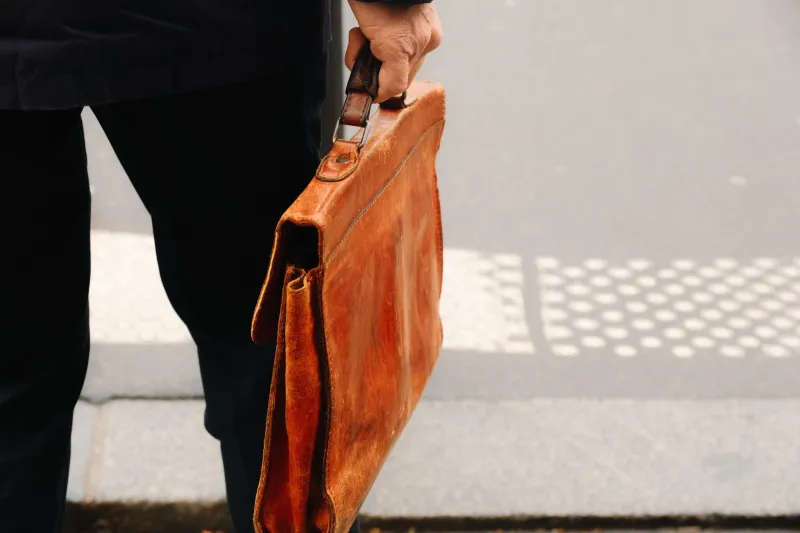
On a Saturday morning in Connecticut, a man who manages a nine-figure investment portfolio arrives early to an estate sale in a colonial revival home outside Greenwich. He is not here for the furniture or the silverware. He is here because a photograph in the auction preview caught his eye: a mid-century leather doctor's bag, dark chestnut, with original brass fittings and a provenance note indicating it had belonged to a physician who practiced in the city from 1951 to 1987. By eleven o'clock, he has paid four hundred dollars for it. He considers this among the better transactions of his recent months.
This is not an isolated anecdote. Across the United States, a quiet but unmistakable shift is underway among the country's most financially unencumbered consumers. They are turning away from the showroom and toward the estate sale, the regional auction house, the carefully curated vintage dealer. And leather — specifically leather of age, quality, and traceable history — is at the center of this reorientation.
The Limits of New
To understand why affluent Americans are going thrift, it helps to understand what the new-luxury market has come to represent for a particular kind of consumer. The past decade has seen an extraordinary proliferation of premium leather goods — brands launched with substantial marketing budgets, heritage narratives constructed rather than earned, price points calibrated to signal exclusivity without the inconvenience of genuine scarcity.
For buyers who are new to luxury, these signals work as intended. The logo, the heritage story, the pristine packaging — they communicate arrival. But for buyers who have been inside luxury long enough to understand its grammar, these signals have become legible as performance. They recognize the constructed narrative. They have seen the same hardware on too many bags. They know that the patina on the showroom floor sample was applied chemically rather than earned over decades.
What they cannot find in a showroom is the one thing they most want: proof. Proof that the leather is exceptional, demonstrated not by marketing copy but by the condition of a piece that has survived forty years of real use and still holds its structure. Proof that the hardware was made to a standard that no longer exists in most production runs. Proof, in the most literal sense, that the thing was worth keeping.
What the Hunt Provides That the Purchase Cannot
There is a second dimension to the estate sale phenomenon that goes beyond the object itself: the acquisition narrative. In certain social registers, how you came to own something has become as meaningful as what you own.
The person who purchased a leather weekender from a luxury brand's flagship store has a transaction. The person who found an identical-quality piece — perhaps superior in hide quality, perhaps made by a manufacturer that no longer exists — at an estate sale in rural Virginia has a story. And in the rooms where taste is the primary currency, the story carries weight that the transaction cannot.
This is not false modesty or performative anti-materialism. It is a genuine recalibration of what constitutes a luxury acquisition. The search, the knowledge required to identify quality without brand signaling, the patience to wait for the right piece — these are forms of expertise that the straightforward purchase cannot demonstrate.
Reading Leather Without a Label
The practical skill at the center of this collecting culture is the ability to evaluate leather quality without reference to brand name, retail price, or marketing context. It is, in many ways, the purest test of leather knowledge — and it is precisely this that draws connoisseurs to the format.
In a thrift store or estate sale, the leather speaks for itself. You assess the grain: is it full-grain, with the natural surface intact, or has it been corrected and coated into uniformity? You examine the hand: does it have the suppleness of a well-tanned hide, or the stiffness of inferior material that has never had the chance to break in properly? You check the stitching: is it even, is the thread substantial, does the seam lie flat without buckling?
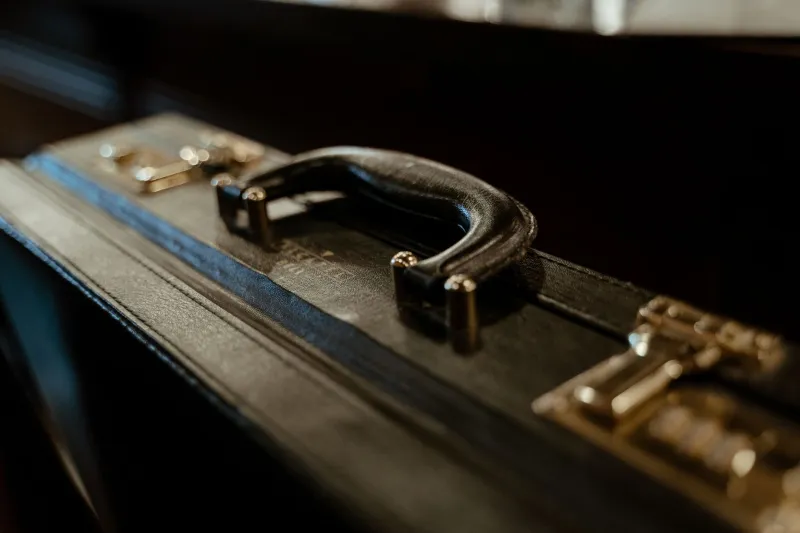
You look at the hardware: is it solid brass or plated zinc? Does it operate with the smooth resistance of quality mechanism or the looseness of cheap casting? You examine the lining: is it leather or canvas or synthetic? You look at the base, the corners, the handle attachment points — the places where inferior construction reveals itself first.
This is reading leather without assistance. And the collectors who have developed this fluency describe it as one of the more genuinely satisfying intellectual exercises available to them. They are not buying a brand's judgment. They are exercising their own.
The Provenance Premium
Not all vintage leather is equal, and the most sophisticated collectors understand that provenance — the documented or traceable history of a piece — carries its own premium that has nothing to do with condition.
A leather saddlebag that can be traced to a particular maker in the American Southwest, or a briefcase with a monogram that connects it to a specific figure in mid-century American business or civic life, carries a historical charge that new leather cannot replicate. These pieces are not merely accessories. They are primary sources.
Estate sales are particularly rich in this regard because they offer context that thrift stores rarely provide. The piece is found in a house, among the possessions of a specific person, often with accompanying documentation — photographs, letters, receipts — that establish its history. The doctor's bag from Greenwich is interesting as an object. It becomes something else entirely when you know it accompanied a physician through thirty-six years of practice in a particular city, in a particular era of American medicine.
The Restoration Question
One of the more nuanced debates within American vintage leather collecting concerns restoration. Purists argue that a piece should be cleaned and conditioned — returned to functional stability — but otherwise left as found. Interventionists contend that sympathetic restoration, using period-appropriate techniques and materials, honors the object's original standard without falsifying its history.
Both positions have merit, and the most considered collectors tend to approach each piece individually. A bag with significant structural damage but exceptional hide quality may justify more intervention than a piece that is structurally sound but cosmetically worn. The guiding principle, in either case, is the same: the goal is not to make the piece look new. It is to allow it to continue being what it is — a survivor.
Finding the Forgotten
For those entering this collecting culture, the practical guidance is straightforward if not simple. Develop the knowledge first: handle as much quality leather as you can, in as many contexts as possible, before you begin hunting. Understand what full-grain feels like against pebbled. Learn to distinguish solid brass hardware from plating by weight and sound. Know which American makers of the mid-twentieth century produced work of lasting quality.
Then find your sources. Estate sale listing services, regional auction houses with strong decorative arts departments, and the handful of vintage dealers who have developed genuine expertise in leather — these are the entry points. The finds will not come every week. They may not come every month. But when they come, they arrive with something no showroom can offer: the irreplaceable weight of a life already lived inside them.
That weight, for the collectors who have learned to feel it, is the whole point.