What the Leather Remembers: A Buyer's Guide to Reading Vintage Wear
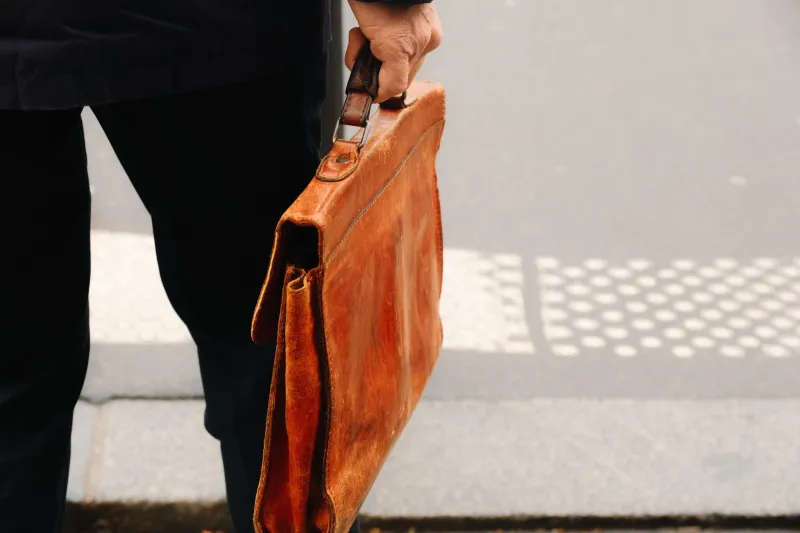
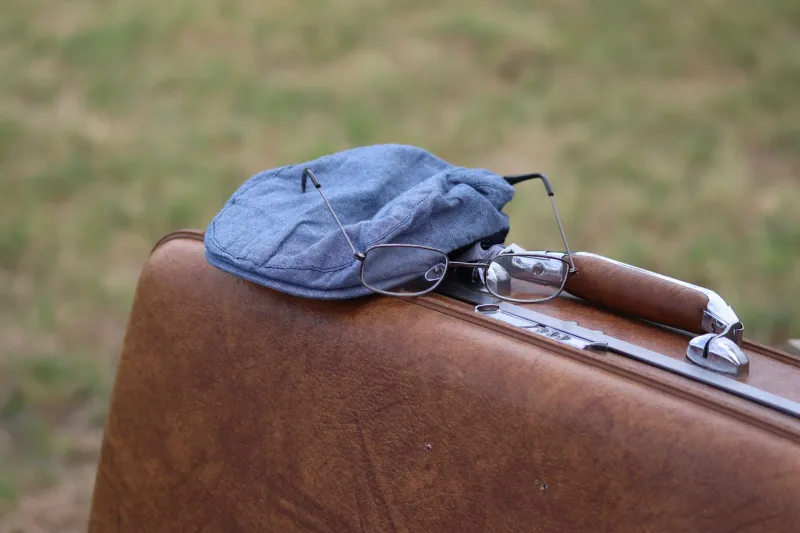
A vintage leather bag arrives in your hands already speaking. The language it uses is not verbal — it is tactile, visual, and deeply specific. The way the handles have darkened, the precise location of the creases across the body, the faint impressions left by contents carried long ago: each detail is a sentence in an account of lived experience. The buyer who knows how to read these marks does not merely acquire a pre-owned object. They inherit a story.
Navigating the secondary leather market with confidence requires developing a particular kind of literacy — one that distinguishes between wear that reflects intentional, caring use and damage that signals neglect or misrepresentation. The difference is consequential, both financially and aesthetically.
The Patina and What It Proves
The most immediate and revealing feature of any vintage leather piece is its patina — the deepening of color and surface sheen that develops through sustained contact with human hands, ambient light, and the oils that naturally accumulate over years of use. A genuine patina is not uniform. It concentrates where the piece was most frequently touched: along the top edge of a bag, across the spine of a portfolio, at the clasp of a wallet.
This uneven distribution is, paradoxically, the mark of authenticity. A patina that spreads with perfect consistency across an entire surface was almost certainly applied artificially — a common technique in the secondary market used to disguise uneven wear or to make a neglected piece appear distinguished. The trained eye recognizes the difference immediately. Natural patina has depth; it seems to come from within the leather rather than sitting on top of it.
Full-grain and top-grain leathers develop the most legible patinas because their surface structure remains intact, capable of absorbing oils and expressing use over time. Corrected-grain and bonded leathers, whose surfaces have been sanded or reconstructed, rarely develop meaningful patinas at all — which is itself useful information when examining a vintage piece claimed to be of high quality.
Crease Patterns as Personal Biography
The creasing on a leather bag or briefcase maps, with surprising precision, how that piece was carried and how fully it was used. A bag that was consistently overpacked will show horizontal stress lines across its lower body — the signature of weight pressing outward against the structure. A bag that was regularly carried by its handles will show vertical creasing at the base of the handle attachment points, where the leather flexed repeatedly under load.
A portfolio or folio that was carried under the arm will display a long, shallow crease running diagonally across one face — the impression of being tucked against a body at a consistent angle. A wallet carried in a back pocket develops a characteristic curve, a permanent memory of the posture of its owner.
None of these patterns indicate poor quality. They indicate use — which is, after all, the entire purpose of a leather good. The question is whether the creasing is consistent with the piece's claimed history and whether it has been managed with care. Creases that have been allowed to crack — where the leather's surface has broken rather than simply folded — suggest a piece that was used without conditioning. This distinction matters. A well-creased piece of leather is distinguished; a cracked one is compromised.
Discoloration: The Map of Neglect and Attention
Color variation on vintage leather tells a more complex story than patina alone. Water staining — recognizable by its irregular, tide-mark borders — indicates that the piece was exposed to moisture without prompt treatment. A single water stain that has been subsequently conditioned and blended into the surrounding leather is a minor historical footnote. Multiple overlapping stains that have never been addressed suggest a long period of neglect.
Darkening around the base corners is nearly universal in bags that have been set down on surfaces throughout their lives — this is expected and, in many cases, handsome. Lightening or graying across broad areas of a surface, however, can indicate sun damage, which degrades the leather's fiber structure and cannot be fully reversed through conditioning.
Ink transfer — the faint ghost of a pen or document pressed against the interior lining — visible on the exterior of a soft-sided bag suggests a piece that was used hard and packed tightly. This is not a disqualifying characteristic. It is evidence of a working life.
Hardware as Honest Witness
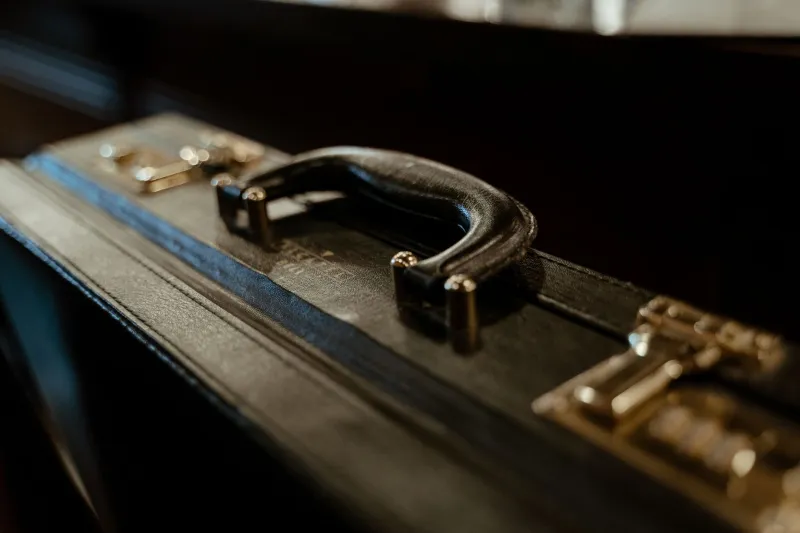
The metal components of a vintage leather piece — clasps, buckles, rings, zippers — are among the most reliable indicators of a piece's true age and the quality of its original construction. Hardware on fine leather goods is typically solid brass or solid nickel, materials that tarnish gradually and predictably. A clasp that shows consistent, even tarnishing across its surface has aged naturally. Hardware that is bright in some areas and deeply tarnished in others may have been partially polished — sometimes to conceal damage, sometimes simply out of incomplete maintenance.
Zipper function is a practical consideration with historical implications. A zipper that operates smoothly despite visible age speaks to the quality of the original mechanism and the care taken to keep it lubricated. A zipper that catches or skips may require professional attention, but it is rarely a reason to dismiss an otherwise exceptional piece.
Buying with Confidence in the Secondary Market
The American secondary leather market — spanning estate sales, curated resellers, and dedicated vintage platforms — contains pieces of genuine distinction available at prices that reflect their age rather than their quality. The buyer equipped to read wear patterns, patina, and hardware condition can identify these pieces with confidence and avoid those that have been misrepresented or poorly maintained.
The most useful question to bring to any vintage leather examination is not "Is this worn?" but rather "How was this worn?" Wear that is consistent, even, and accompanied by evidence of periodic conditioning tells a story of respect. Wear that is erratic, deep, and unaddressed tells a different one.
The leather remembers everything. The buyer's task is simply to learn to listen.