Before You Speak, Your Briefcase Already Has: The Rise of Leather as the Language of American Ambition

There is a moment, familiar to anyone who has ever walked into a high-stakes meeting, when the room makes its first judgment before a single word is exchanged. Posture, attire, and presence all contribute — but few objects communicate as efficiently, or as permanently, as what a person sets down on the conference table. For more than a century, that object has most often been made of leather.
The American briefcase is not merely a carrying vessel. It is a declaration. And understanding its evolution is to understand something fundamental about how this country has always measured ambition.
The Post-War Executive and the Birth of the Attaché
The modern professional leather case finds much of its cultural origin in the years following World War II. As millions of veterans transitioned into corporate life — populating the expanding office towers of New York, Chicago, and Los Angeles — a new kind of uniform began to take shape. The gray flannel suit is the piece most often cited. But the slim leather attaché case, carried with a certain practiced ease, was equally central to the aesthetic of the postwar American executive.
These were not casual accessories. They were crafted from full-grain cowhide and bridle leather, built by American manufacturers who understood that a professional case would be tested daily — against subway crowds, taxi backseats, and decades of accumulated use. The hardware was solid brass. The stitching was hand-finished. The implicit message was permanence: this is a man who intends to be here tomorrow, and the day after that.
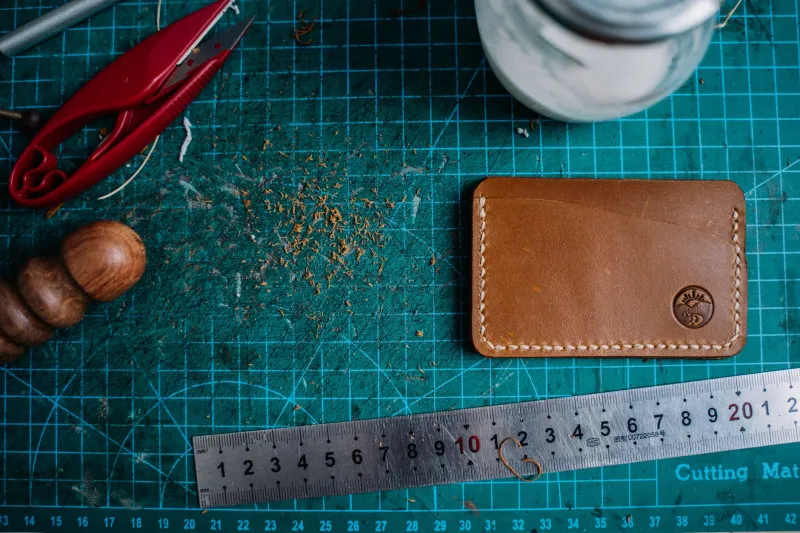
Monogramming became a quiet ritual during this era. Initials pressed or embossed into the front panel of a portfolio were not vanity — they were identity. In an office culture where many men wore nearly identical suits, a monogrammed leather piece was one of the few permissible expressions of individual distinction. It said: I have arrived, and I intend to be remembered.
The Portfolio as Proxy for Preparation
As corporate culture evolved through the 1960s and 1970s, a parallel accessory rose alongside the briefcase: the leather portfolio. Slim, authoritative, and carried under the arm or placed deliberately on the table before a presentation, the portfolio became the professional's most visible signal of preparedness.
To enter a meeting with a fine leather portfolio was to suggest that what it contained — proposals, contracts, correspondence — was worth protecting. Leather, after all, is not the material of the temporary. It is the material of the considered, the committed, the consequential. Clients and colleagues read this subtext instinctively, even when they could not articulate it.
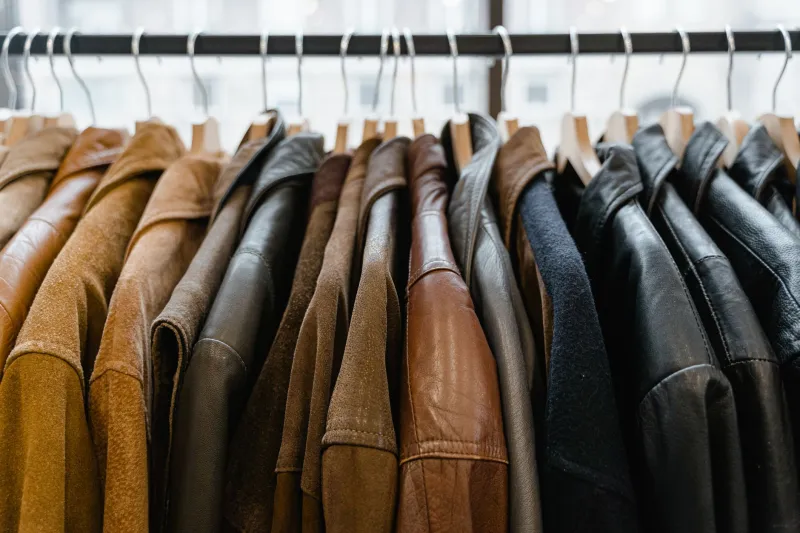
American law firms, investment banks, and advertising agencies all developed their own quiet cultures around leather goods during this period. A junior associate carrying a worn, well-made leather case signaled something different — and arguably more compelling — than one carrying something cheap and new. Patina was not a flaw. It was evidence.
When Plastic Tried to Replace Purpose
The 1990s introduced a disruption that the leather goods world had not previously encountered at scale: the proliferation of synthetic briefcases, nylon computer bags, and eventually the ubiquitous rolling carry-on. As technology reshaped the office and laptops replaced legal pads, the form of the professional carrying case had to adapt. Manufacturers responded — some wisely, some not — and for a period, the traditional leather briefcase appeared to be retreating.
The fast-fashion briefcase arrived shortly after: inexpensive, trend-responsive, and entirely without the intention of lasting. These pieces could mimic the silhouette of a fine leather attaché from a distance, but they carried none of the weight — literal or symbolic. They were, in the truest sense, disposable.
What their proliferation revealed, however, was not that professionals no longer valued quality. It was that the market had briefly convinced them that quality was optional. That lesson, for many, did not hold.
The Return of Investment Leather in the Hybrid Office
Something notable has been unfolding in American professional culture over the past several years. As the hybrid office normalized — and as video calls stripped away much of the physical vocabulary of professional presence — those who do appear in person have found renewed power in the tangible. The leather briefcase, the structured portfolio, the slim document case in full-grain vegetable-tanned hide: these pieces have returned not as nostalgia, but as counterstatement.
The modern executive who sets a beautifully made leather briefcase on the table is communicating something that no synthetic alternative can replicate: intentionality. In an era of disposable everything, choosing a piece built to last thirty years is itself a form of professional philosophy. It suggests a longer view — of careers, of relationships, of the kind of work worth doing.
Younger professionals, in particular, have been among the most deliberate adopters of investment leather goods. Having grown up in a culture of relentless consumption, many are actively seeking objects that resist that current. A fine leather attaché purchased at thirty, they understand, will still be with them at fifty — changed by time, but not diminished by it.
What the Briefcase Continues to Say
The boardroom briefcase has always been a form of communication that operates below conscious awareness. It speaks to craftsmanship and care. It implies that the person carrying it has made considered choices — and will likely make considered choices in the meeting ahead. It suggests, without arrogance, that some things are worth investing in properly.
None of this requires a logo. In fact, the most enduring pieces in American professional culture have almost always been the quietest ones: the unmarked full-grain leather portfolio, the slim attaché with clean brass hardware, the document case worn smooth at the corners after years of faithful use. These objects do not announce themselves. They simply endure — and in enduring, they say everything.
At Leather Iconic, we believe that the finest accessories are the ones that grow more meaningful with time, not less. The briefcase that accompanies you into your first major negotiation and your hundredth is not merely a bag. It is a record of where you have been, and a quiet promise of where you intend to go.
Crafted to last. Designed to define.