A Century in Hide: The Leather Pieces That Shaped American Identity, Decade by Decade
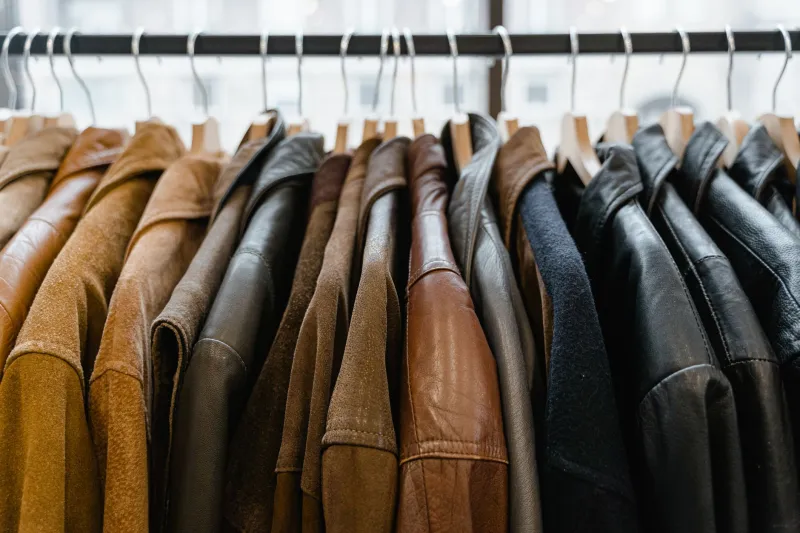
Fashion trends arrive and dissolve with remarkable speed. Silhouettes shift, color palettes rotate, and what felt urgent last season can feel exhausted by the next. Yet leather — in its most considered, most purposefully crafted forms — has demonstrated a singular resistance to that cycle. The reason, upon close examination, is not simply material durability. It is cultural durability. The leather pieces that endure do so because they were never merely about appearance. They were about meaning.
To trace the arc of American leather through the twentieth and early twenty-first centuries is to trace the arc of the nation itself: its ambitions, its anxieties, its moments of collective confidence, and its quiet searches for identity. What follows is that story, told decade by decade through the objects that carried it.
The 1940s: The Bomber Jacket and the Brotherhood of Service
No leather garment in American history arrived with more concentrated purpose than the A-2 flight jacket. Developed by the U.S. Army Air Corps and issued to pilots beginning in the early 1930s, the A-2 became the defining leather silhouette of the World War II era. By the 1940s, it was ubiquitous in cockpits from the Pacific Theater to the skies over Europe.
What made the A-2 iconic was not merely its association with heroism, though that association was profound. It was the jacket's design logic — the snap collar, the fitted waist, the clean front with minimal hardware — that communicated something essential about the American character: functional, unadorned, built for performance. Pilots personalized their jackets with painted nose art and mission tallies, transforming a standardized garment into an individual statement. The A-2 was perhaps the first American leather piece to balance institutional uniformity with deeply personal expression.
Its legacy persists. The bomber silhouette has been reinterpreted countless times, but the original remains the benchmark against which all successors are measured.
The 1950s: The Motorcycle Jacket and the Grammar of Rebellion
If the A-2 represented collective sacrifice, the motorcycle jacket — particularly the asymmetrical, hardware-laden styles popularized by brands like Schott NYC — represented something more confrontational. By the mid-1950s, the biker jacket had become the unofficial uniform of American counterculture, worn by the young men who rejected the conformity of postwar suburban life.
Marlon Brando's appearance in The Wild One (1953) crystallized the garment's symbolism. The jacket was danger, independence, and a studied refusal to comply. Yet what is remarkable in retrospect is how architecturally sound those early designs were. The diagonal zipper, the snap lapels, the quilted shoulder panels — each detail served a genuine protective or functional purpose. The jacket's rebellious aura was, in fact, built on exceptional construction.
This is a truth that serious leather enthusiasts come to appreciate: the pieces that endure longest are almost always the ones engineered with integrity first.
The 1960s and 1970s: The Saddlebag and the American Road
As American culture expanded outward — geographically, politically, spiritually — leather accessories followed. The saddlebag-style handbag, rooted in Western equestrian tradition, found new relevance during the counterculture era. Worn crossbody, crafted in natural tan or cognac leathers, often with minimal hardware and visible stitching, it suited a generation that valued authenticity over ornamentation.
By the 1970s, the leather belt had become its own cultural statement. Wide, hand-tooled, occasionally adorned with turquoise or silver, it reflected the decade's embrace of American craft traditions and Southwestern aesthetics. These were not merely accessories. They were declarations of where one stood — literally and philosophically.
The 1980s: The Power Briefcase and the Architecture of Ambition
The 1980s recalibrated the American leather narrative entirely. In the decade of deregulation, Wall Street, and conspicuous professional ambition, the structured leather briefcase became the preeminent status object. Crafted in dark mahogany or black full-grain leather, fitted with brass hardware and combination locks, it communicated authority before its owner spoke a word.
This was leather as professional armor. The briefcase of this era was not subtle — it was not meant to be. It announced arrival. And yet the finest examples from this period, built on rigid frames with hand-stitched gussets and vegetable-tanned interiors, have aged into genuinely beautiful objects. The pretension has faded. The craftsmanship remains.
The 1990s: The Minimalist Wallet and the Quiet Luxury Precursor
As the excess of the 1980s gave way to a more ironic, self-aware cultural moment, leather accessories contracted. The bifold wallet — slim, unbranded, crafted in a single panel of fine leather — became the quiet choice of those who understood that restraint was its own form of sophistication. Logo saturation from European luxury houses had reached a peak, and a countercurrent began to form: Americans who preferred their quality unannounced.
This decade planted the seeds of what would later be called "quiet luxury" — a philosophy that Leather Iconic holds as foundational to everything it represents.
The 2000s and Beyond: The Structured Tote and the Informed Consumer
The early twenty-first century produced the structured leather tote as its defining accessory. Clean lines, top handles, a silhouette capacious enough for modern life but architectural enough to maintain form — it was the briefcase reimagined for a generation that moved fluidly between professional and personal worlds.
What distinguishes this era's most enduring pieces is the consumer intelligence behind them. Buyers in this period began researching leather grades, hardware quality, and construction methods with a rigor previously reserved for audiophiles or watchmakers. The iconic piece was no longer simply the one with the most cultural cachet. It was the one that could be justified on every level.
What the Through-Line Reveals
Across each of these decades, a pattern emerges. The leather pieces that earned the designation "iconic" were never the ones chasing the moment. They were the ones built for something larger than the moment — for function, for longevity, for a kind of material honesty that communicates quality without requiring explanation.
At Leather Iconic, this is not merely history. It is the design philosophy that informs every piece we celebrate. The bomber jacket endured because it was built to protect. The minimalist wallet endured because it respected the intelligence of its owner. The structured tote endures because it serves real life without sacrificing beauty.
A century of American leather tells us something simple and important: the pieces that define an era are never the trendiest ones. They are the truest ones.