Reborn in Your Hands: The Art of Claiming an Inherited Leather Piece as Your Own

Photo: Shixart1985, CC BY 2.0, via Wikimedia Commons
There is a particular kind of stillness that settles over a room when you open a box and find your father's leather jacket folded inside. The smell arrives first—a compound of old tannin, worn lining, and something ineffably personal. Then the weight of it in your hands. Then the realization, quiet and slightly deflating, that it does not fit.
The shoulders are too broad or the waist cuts wrong. The sleeves hang past your wrists by two inches. You hold a garment that carries thirty years of someone else's life, and you are standing there unable to wear it.
This is not a failure of inheritance. It is simply the beginning of a different kind of conversation—one between the original maker, the original wearer, and you.
Why the Fit Problem Is Actually a Philosophical Problem
When a leather piece is passed down through a family, the instinct is often preservation: keep it exactly as it was, display it, store it with cedar blocks and reverence. This impulse is understandable and, to a degree, admirable. But preservation without use is a form of burial. Fine leather was made to move through the world, to accumulate light and friction and meaning. A jacket sealed in a garment bag is a jacket that has stopped living.
The more honest question is not how do I keep this exactly as it was but rather how do I make this mine without making it unrecognizable. These are genuinely different questions, and the second one is harder.
Contemporary craftspeople who specialize in leather restoration and alteration describe this tension regularly. The emotional weight that clients bring to inherited pieces is unlike anything else in the trade. A woman in Chicago brought a 1970s motorcycle jacket that had belonged to her mother to a leather artisan on the city's north side. The jacket was a full size too large, the lining had separated at the seams, and the original hardware had oxidized to a dull, uneven pewter. She did not want a new jacket. She wanted that jacket—but wearable, but hers.
The artisan took it in at the side seams and the back panel, replaced the deteriorated lining with a deep burgundy silk, and had the hardware professionally polished rather than replaced. The result was a jacket that fit her body while remaining, unmistakably, her mother's.
The Three Paths of Leather Inheritance
Not every inherited piece requires the same approach. In practice, there are three distinct paths available to someone who has received a significant leather good from a family member, and the right one depends on the condition of the piece, its original quality, and the relationship you want to have with it going forward.
Restoration with Minimal Alteration suits pieces that are structurally sound but have suffered from neglect or improper storage. Deep conditioning, professional cleaning, hardware attention, and lining repair can return a neglected bag or jacket to something close to its original state. This path makes sense when the piece fits or when fit is not the primary concern—a leather portfolio, a weekend bag, a belt—and when the original design still speaks to your aesthetic.
Structural Alteration is the more demanding path, and it requires finding a craftsperson with genuine skill in leather resizing. Unlike fabric, leather cannot simply be let out if it has been taken in; the hide carries memory of every cut and stitch. This means alterations must be planned carefully and executed with precision. When done well, however, a resized leather jacket can feel as though it were made for the new wearer. The key is working with an artisan who respects the original construction rather than treating the piece as raw material.
Creative Reinterpretation is the most personal and, for some, the most fraught option. This involves using the original piece as a foundation for something genuinely new—converting a structured briefcase into a more relaxed crossbody, removing the sleeves from a jacket to create a vest, or incorporating panels of a worn leather bag into a new piece commissioned from a maker. This path requires the most emotional permission. It is an act of authorship, not just stewardship.
Honoring Without Freezing
There is a meaningful distinction between honoring a piece and freezing it in time. Honor acknowledges what the leather has already lived. It respects the craftsmanship that went into the original construction and the life that was lived inside it. But honor does not require stasis.
Consider the language we use around heirlooms: we speak of passing things down, as though the direction of movement is always downward, always toward preservation and gravity. A more generative framing might be to think of inherited leather as something passed forward—something that continues its life through new hands, new contexts, new stories.
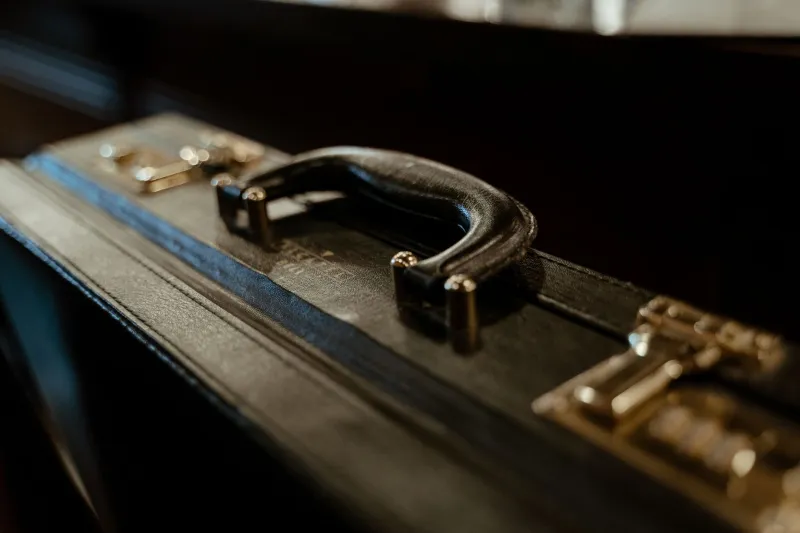
A man in Nashville inherited his grandfather's leather attaché case, a piece crafted in the early 1980s from full-grain cowhide with brass hardware and a combination lock. The case was impeccably made but entirely misaligned with his work as a freelance creative director. He brought it to a leather workshop in East Nashville, where the interior was reconfigured to accommodate a laptop sleeve and modern organizational pockets, while the exterior remained untouched. The original brass hardware stayed. The patina stayed. The combination—his grandfather's birthday—stayed.
He carries it to client presentations. People ask about it constantly.
What You Owe the Original Piece
The question of obligation is worth sitting with. What, if anything, do you owe a leather piece that was made for someone else and worn by someone you loved?
You owe it use. You owe it care. You owe it the dignity of being seen rather than stored.
You do not owe it immobility.
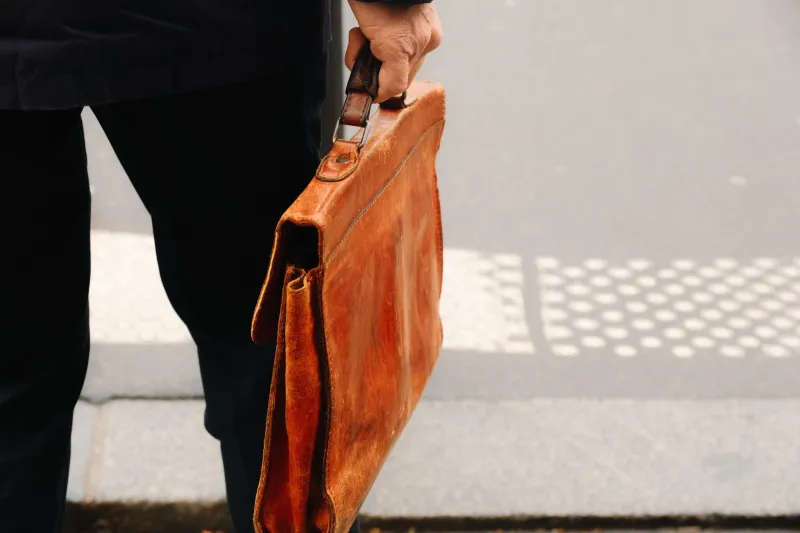
The finest leather goods were designed to endure precisely because they were meant to be used across time, not in spite of it. When a craftsperson builds a jacket or a bag to last decades, they are implicitly inviting the next generation into the object's life. The wear patterns your father left on the handles of his briefcase are not damage to be corrected—they are data, evidence of a life, a contribution to the piece's ongoing story. Your own wear patterns, added over the next twenty years, will be equally honest.
The piece that fits you—whether through alteration, reinterpretation, or simply the luck of shared build—becomes a site of genuine connection across time. Not a museum artifact. Not a costume. A living object, worn by someone who chose to carry it forward.
That choice, in the end, is the most meaningful form of inheritance there is.