The Power of Anonymity: How Unmarked Leather Became America's Subtlest Status Signal

For several decades, the grammar of luxury fashion in America was relatively straightforward: the larger the logo, the clearer the message. Interlocking initials, embossed house crests, and stamped heritage marks served as a kind of wearable credential — proof of expenditure, of access, of membership in a particular economic tier. The logic was legible and, for a time, effective.
That logic is now being quietly dismantled by the very consumers it was designed to impress.
Across the country, a growing cohort of affluent, style-conscious Americans is gravitating toward leather goods that carry no visible branding whatsoever. No monograms. No house marks. No embossed signatures on the exterior. Just leather — supple, substantial, and entirely self-sufficient. The trend, if it can be called that, is less a fashion moment than a philosophical position. And it is reshaping what the most discerning buyers expect from a premium accessory.
When the Logo Became the Liability
The oversaturation of luxury branding did not happen quietly. Over the past two decades, heritage houses expanded their licensing, broadened their distribution, and watched their most iconic marks migrate from flagship boutiques to airport shops and outlet centers. The result was predictable: the mark that once signaled exclusivity began to signal something considerably more ambiguous.
For buyers who had invested in these brands as expressions of genuine taste, the dilution was disorienting. The bag that once communicated discernment now communicated only purchasing power — and purchasing power, in an era of accessible credit and aspirational consumption, was no longer a particularly refined message.
The response among those with the most sophisticated relationship to dress was not to seek louder alternatives. It was to seek silence.
The New Vocabulary of Restraint
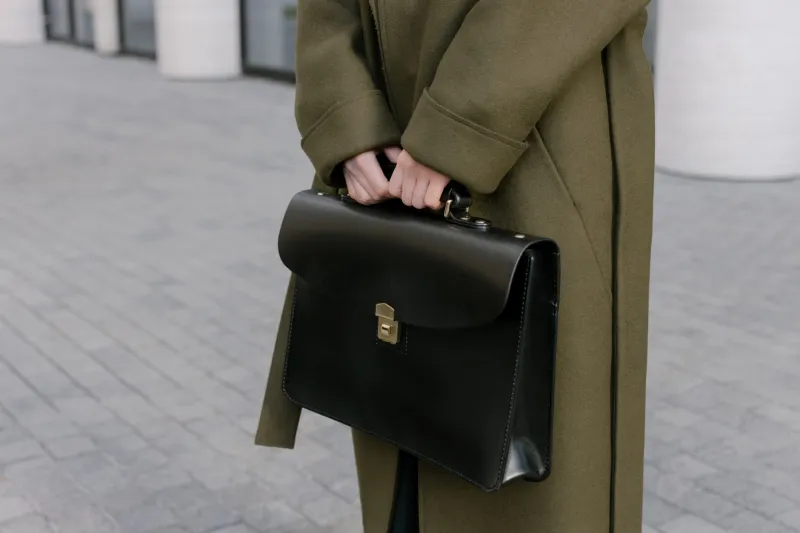
An unmarked leather briefcase, carried by someone who moves through professional environments with ease, communicates something that no logo can replicate: confidence that requires no external validation. The piece does not ask to be recognized. It does not depend on the viewer's familiarity with a brand's visual language. It simply exists, in full-grain leather, with precise stitching and considered proportions, as an object of evident quality.
This is the paradox at the heart of the unbranded movement. The absence of a mark does not diminish the signal — it sharpens it. For those who understand materials and construction, an unmarked piece of exceptional leather is more legible as a luxury object than one festooned with identifying hardware. The quality speaks without an introduction.
And crucially, it speaks only to those who know how to listen. This selectivity is, for many buyers, precisely the point.
Authenticity as the New Aspiration
The cultural context for this shift extends well beyond fashion. American consumers across multiple categories — food, furniture, travel, architecture — have in recent years demonstrated a marked preference for the authentic over the performative. The artisan loaf over the chain bakery. The independent hotel over the branded resort. The locally sourced over the globally marketed.
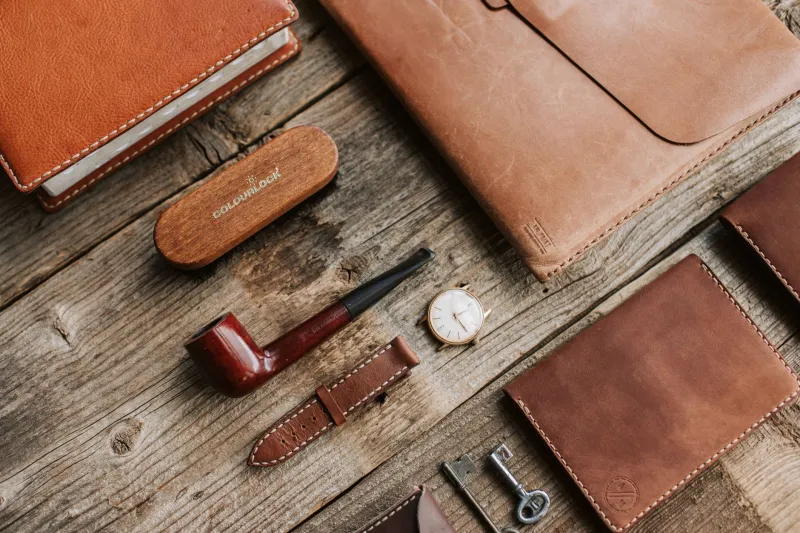
Leather goods occupy a natural place in this broader reorientation. A bag produced by a small American workshop, using traditional tanning methods and full-grain hides, carries an authenticity that a mass-produced piece with a prestigious label cannot manufacture. Its value is intrinsic rather than borrowed. Its quality is the argument, not the brand's advertising spend.
For buyers who have grown skeptical of the machinery of luxury marketing — the seasonal campaigns, the celebrity placements, the carefully managed scarcity — an unmarked piece of honest leather represents something genuinely countercultural. It refuses to participate in the performance.
What the Unbranded Choice Actually Signals
It would be a misreading to interpret the rejection of visible branding as indifference to quality. The opposite is closer to the truth. Buyers who choose unmarked leather goods are typically among the most informed consumers in the market — those who can evaluate a piece by the grade of its hide, the structure of its stitching, and the behavior of its hardware, rather than by the name on its interior stamp.
This knowledge-based approach to luxury acquisition is itself a form of social signaling, but one that operates on an entirely different frequency. It communicates not to everyone in the room but to the specific few who share the same level of material literacy. The result is a kind of quiet exclusivity — more durable, and arguably more meaningful, than the loud variety.
Among the professional class in American cities — lawyers, architects, executives, academics — the unmarked leather bag or portfolio has become a recognizable emblem of this sensibility. It says, without saying anything at all, that the person carrying it has moved past the need for external confirmation.
The Craft Behind the Quiet
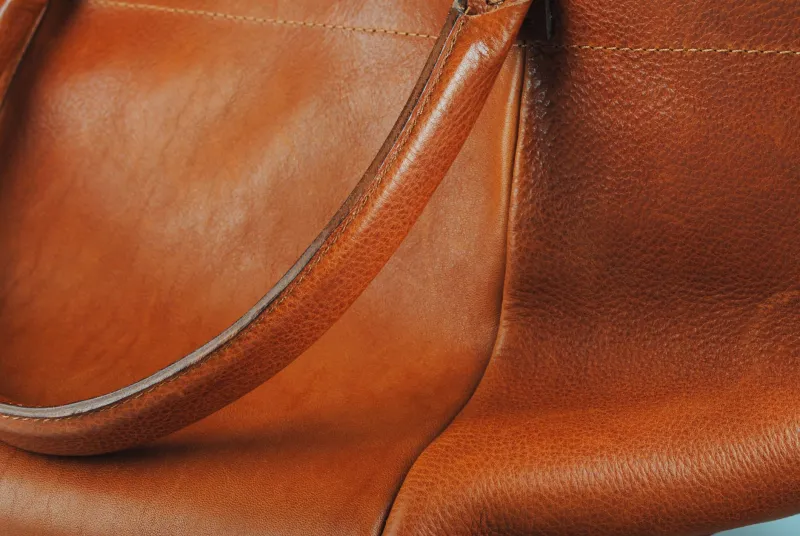
The irony of the unbranded movement is that it demands more of the object, not less. When a piece carries no name to lean on, every element of its construction must justify itself independently. The leather must be exceptional. The stitching must be precise. The proportions must be considered. The hardware must function flawlessly and age gracefully.
This is why the finest unmarked leather goods tend to originate from workshops where traditional methods are not a marketing point but a genuine operating philosophy — places where the craft is the entire value proposition. These makers have no interest in brand architecture or seasonal collections. They are interested in producing objects that will outlast the trends, the logos, and the conversations about both.
Dressing for the Long View
The movement away from visible branding in leather goods is, at its core, a vote for permanence over novelty. A logo is, by definition, tied to a moment — to the cultural currency of a particular house at a particular time. An unmarked piece of fine leather is tied to nothing except its own quality, which does not expire.
For the American consumer who thinks in decades rather than seasons, this distinction is not subtle. It is fundamental. The piece that will look as considered in fifteen years as it does today is the piece worth carrying. And increasingly, that piece carries no mark at all — except the one left by time, care, and a life lived with intention.