The Arithmetic of Excellence: What Premium Leather Actually Costs You Per Year
There is a moment familiar to anyone who has stood at a leather counter, admiring a briefcase or wallet that carries a price tag well above what they expected to spend. The figure registers as an obstacle. The instinct is to step back, to recalibrate, to find something more accessible. What that instinct fails to account for is time — and time, as it turns out, is the most important variable in the entire equation.
The true cost of a leather good is not the number on the tag. It is that number divided by the years, even decades, of dependable service the piece provides. Understood this way, the economics of premium leather shift dramatically — and often permanently change how a buyer thinks about quality.
The Cost-Per-Year Calculation That Changes Everything
Consider two wallets. The first is a fast-fashion bifold, purchased for $35 at a chain retailer. It is made from bonded leather — a composite material that layers shredded leather fibers onto a polyurethane backing. Within eighteen months, the corners begin to split, the stitching loosens, and the surface develops an unappealing flakiness. By month twenty-four, a replacement is necessary. Over ten years, the buyer has purchased five such wallets, spending $175 and discarding five pieces.
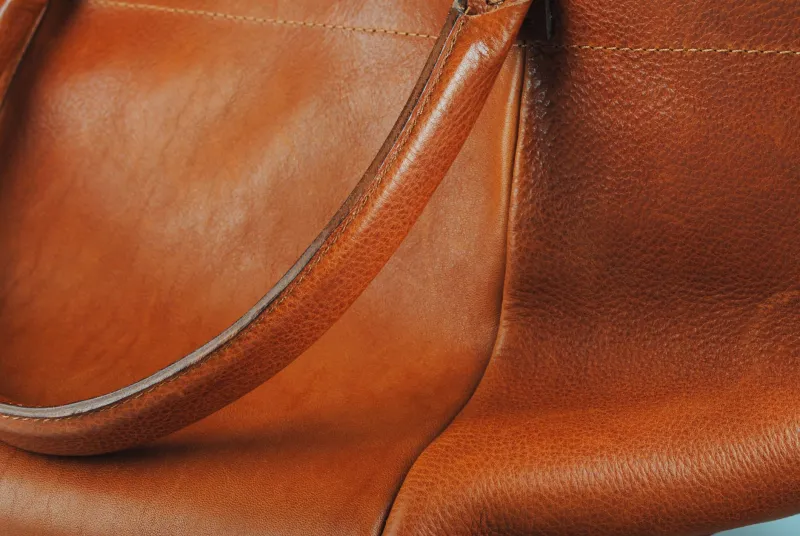
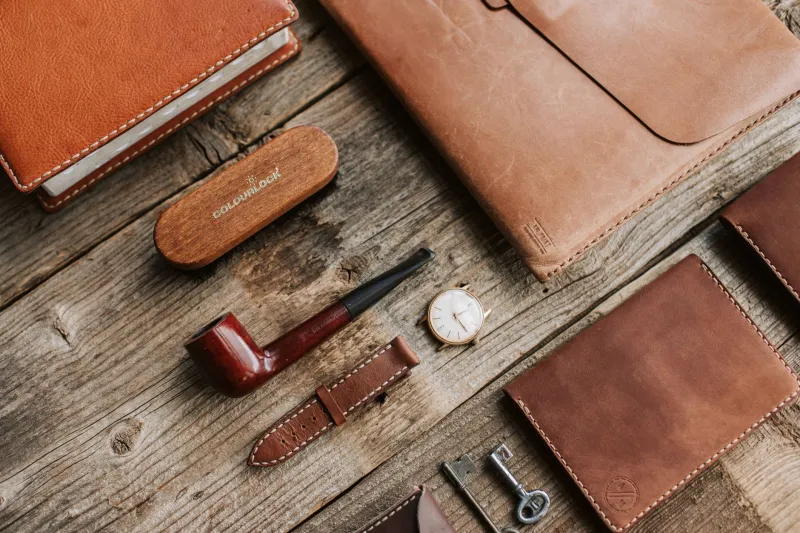
The second wallet is crafted from full-grain vegetable-tanned leather, purchased for $195 from an American artisan workshop. Its construction uses saddle-stitching — a hand-executed technique that, unlike machine stitching, will not unravel if a single thread breaks. With annual conditioning and minimal maintenance, this wallet remains structurally sound and aesthetically distinguished for fifteen years or more. Over that same ten-year window, the buyer has made one purchase. The cost per year: under $20.
This is not a hypothetical designed to flatter luxury goods. It is a straightforward accounting of how materials behave under sustained use.
What Fast Fashion Costs Beyond the Register
The financial argument for premium leather becomes even more compelling when secondary costs are factored in. Inferior leather goods rarely fail gracefully. A bag with a broken zipper or a detached handle requires either professional repair — which on a low-cost piece often exceeds the item's original value — or outright replacement. Neither outcome is economical.
Premium leather goods, by contrast, are designed with repairability as a core feature. Independent cobblers and leather craftspeople across the United States regularly restore high-quality pieces to full function for a fraction of the cost of replacement. Resoled shoes, restitched seams, and reconditioned surfaces extend the life of a fine piece by years. The infrastructure for maintaining quality exists precisely because quality is worth maintaining.
There is also the question of environmental cost, which an increasing number of American consumers now factor into purchasing decisions. A leather briefcase replaced every three years generates three times the waste of one that lasts a decade. The production cycle of fast-fashion accessories — including the chemical processes involved in low-grade tanning — carries environmental consequences that compound with every replacement purchase.
Three Pieces, Three Decades: A Case Study in Leather Economics
To move beyond abstraction, consider the leather wardrobe of a professional who enters the workforce at twenty-five and reaches retirement at sixty-five.
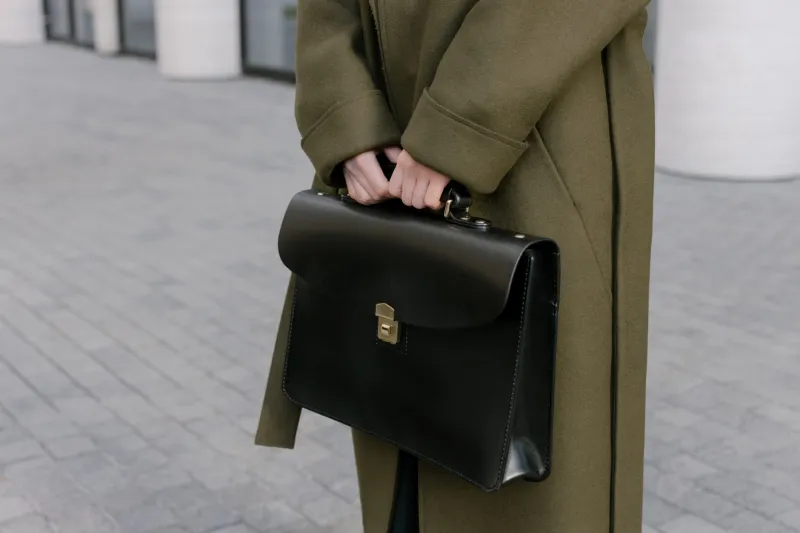
The Briefcase. A full-grain leather briefcase purchased at career entry for $650 — a figure that may seem steep at twenty-five — averages out to $16.25 per year over a forty-year career. A bonded-leather alternative at $120, replaced every four years, costs $1,200 over the same period and produces ten discarded bags.
The Belt. A hand-stitched, vegetable-tanned leather belt purchased for $180 will, with occasional conditioning, outlast virtually any wardrobe it accompanies. A fast-fashion belt at $30, replaced annually, costs $1,200 over forty years — while the premium belt costs less than $5 per year.
The Card Holder. A slim, full-grain card case purchased for $95 develops a rich patina over years of daily use, becoming more personal and more distinguished with time. Its $30 counterpart, replaced every two years, costs $600 over the same forty-year period — more than six times the investment.
The cumulative picture is unambiguous. The buyer who invests in quality leather goods at the outset spends less money across a lifetime, generates less waste, and carries pieces that improve rather than deteriorate with age.
The Intangible Dividend
There is one return on investment that does not appear in a spreadsheet but is nonetheless real: the confidence that comes from carrying something built to endure. A well-made leather bag or wallet does not require constant mental accounting — the quiet worry about whether it will hold together through a demanding week, whether it will look presentable in a client meeting, whether it is already nearing the end of its useful life.
American professionals who have made the transition from fast-fashion accessories to premium leather goods consistently describe the same experience: a reduction in the ambient friction of daily life. The piece simply performs. Year after year, it performs.
Buying Once, and Buying Right
The financial case for premium leather is not an argument for extravagance. It is an argument for precision — for spending deliberately on things that will not need to be replaced, rather than spending repeatedly on things that will. This distinction matters more as one's career advances and time becomes the scarcest resource.
A leather good from a workshop committed to traditional craftsmanship and honest materials is, in the most literal sense, a long-term investment. Its value is not speculative. It is measured in years of uninterrupted service, in the absence of replacement costs, and in the quiet authority that only a well-aged, well-tended piece of leather can project.
The arithmetic, examined honestly, is never really close.