The Inheritance Question: Choosing Leather That the Next Generation Will Actually Want
Photo: FOTO:Fortepan — ID 9643: Adományozó/Donor: Szent-tamási Mihály. archive copy at the Wayback Machine, CC BY-SA 3.0, via Wikimedia Commons
There is a particular kind of optimism embedded in the idea of the heirloom. We imagine a briefcase passed from father to son, a handbag moving from mother to daughter, a leather journal carrying the fingerprints of two or three lifetimes. These are beautiful narratives, and they are not entirely fiction—but they are more selective than the romanticized version suggests.
The harder truth, one that estate attorneys and family historians encounter regularly, is that most leather goods do not survive the generational transfer intact. Not because they fail structurally, but because nobody wants them. They sit in storage, are donated to secondhand shops, or are quietly discarded by heirs who find themselves unable to use what they cannot connect to. The piece was loved. The love simply did not transfer.
This is not a sentimental problem. It is a design problem—and one that can be solved with clarity and intention at the moment of purchase.
What Estate Specialists Actually See
Professionals who work with estates and family possessions report a consistent pattern in what leather survives generational transition with genuine desire attached to it. The pieces that heirs actively seek—that prompt conversations about who will receive them before the original owner has even considered the question—share recognizable characteristics.
They are almost uniformly simple in form. Clean lines, restrained hardware, minimal or absent logo presence. The estate specialist who has processed dozens of collections will tell you the same thing: the monogrammed, trend-adjacent, heavily branded pieces are the ones that end up in donation boxes. The unadorned, well-proportioned, structurally excellent pieces are the ones that prompt negotiations among siblings.
"What we find," notes one New England estate coordinator who has worked with several multi-generational American families, "is that the pieces people fight over are rarely the most expensive ones in the collection. They're the ones that look like they belong to no particular decade. They could have been made thirty years ago or last year, and you genuinely cannot tell."
This observation contains the clearest possible guidance for buyers thinking about longevity.
The Difference Between Nostalgic and Timeless
Nostalgia is not the same as timelessness, and confusing the two is among the most common errors in heirloom thinking. A piece that evokes a specific era—that carries the design signatures of its decade, the hardware proportions fashionable in a particular moment, the colorways that defined a specific trend cycle—may be deeply beloved by its original owner. It may carry genuine emotional weight. But its appeal is anchored in a specific cultural moment, and when that moment recedes, the object recedes with it.
Timeless design operates differently. It does not reference its era; it transcends it. The characteristics of truly timeless leather goods are not mysterious: proportions that are neither exaggerated nor miniaturized beyond function, hardware that serves the piece rather than decorating it, color choices that exist in the permanent vocabulary of leather—black, tan, cognac, burgundy, natural—rather than the seasonal vocabulary of fashion.
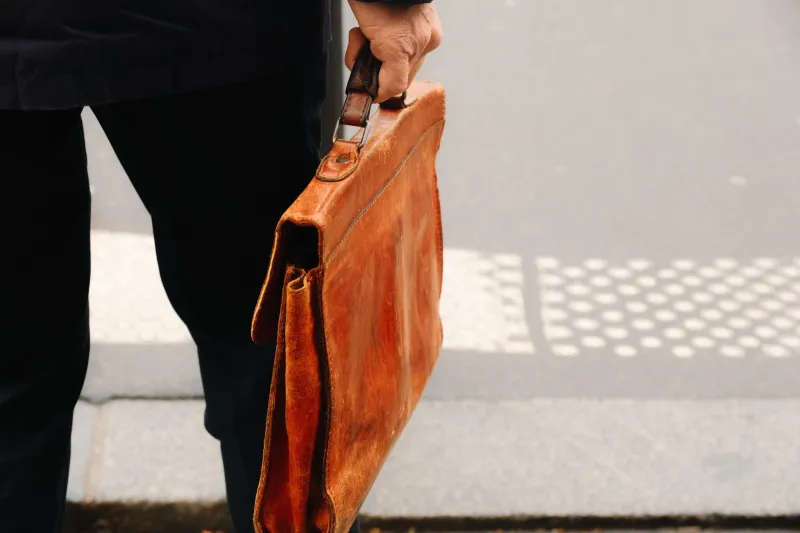
Consider the difference between a structured briefcase in natural full-grain leather with simple brass hardware and a logo-embossed tote in a fashion-house colorway from a particular season. Both may be well-made. Both may be genuinely loved. But only one of them will look appropriate in the hands of someone twenty-five years younger than its original owner, in a cultural context that neither of them can fully anticipate.
Generational Taste Shifts and the Versatility Requirement
Each generation inherits not only objects but the aesthetic sensibility of the one that preceded it—and then spends considerable effort distinguishing its own preferences from what it received. This is not ingratitude; it is the natural process of identity formation. The heir who genuinely uses a parent's leather piece is one who finds in it something that speaks to their own sense of self, not merely their sense of obligation.
This means that pieces with the greatest chance of genuine inheritance are those flexible enough to accommodate multiple aesthetic interpretations. A well-made leather duffel bag in a neutral colorway can be styled into virtually any wardrobe across any decade. It does not insist on a particular context. It offers itself as a tool and allows the new owner to define the relationship.
Pieces that insist on being read a specific way—that carry strong stylistic directionality, heavy branding, or proportions calibrated to a particular fashion moment—offer the heir no such flexibility. They require the new owner to adopt the original owner's aesthetic sensibility wholesale, which is precisely what most heirs are not inclined to do.
Multi-Generational Families on What Survives
Conversations with families who have successfully transferred leather goods across two or more generations reveal consistent themes. The pieces that made the journey were typically purchased not as fashion statements but as tools—objects selected for their function and their quality rather than their cultural visibility at the moment of purchase.
One family in the mid-Atlantic region describes a hand-stitched leather portfolio that has passed through three generations of attorneys. It is, by any measure, an unremarkable object in terms of visual drama—dark brown, simply constructed, bearing no maker's mark that any of its owners has been able to identify. What it carries instead is structural integrity and a patina that has deepened across sixty years of professional use. Each new owner has had it conditioned and repaired as needed. Each has found, upon receiving it, that it required no apology and no context. It simply worked, and it looked like something worth carrying.
This is the inheritance that functions. Not the showpiece, but the tool—the object so well made and so honestly designed that its value requires no explanation across the distance of decades.
Choosing for the Person You Cannot Yet Imagine
The most useful exercise for buyers thinking about genuine longevity is a deliberate imaginative act: set aside your own aesthetic preferences entirely and ask what the piece will look like to someone you cannot yet know, in a decade you cannot yet see.
Will its proportions seem dated or permanent? Will its hardware read as fashionable or functional? Will its color situate it in a specific era or place it in the timeless vocabulary of the material itself? Will a younger person be able to carry it without feeling that they are performing someone else's identity?
If the answers are honest and the piece passes this examination, you have found something worth the investment—not merely for the years you will carry it, but for the years that follow. The leather that earns its place in the next generation is the leather that was chosen, from the beginning, with that generation already in mind.