One Bag to Rule Them All: The Financial and Emotional Case for Choosing Quality Over Quantity
There is a particular kind of buyer's remorse that arrives not in the immediate aftermath of a purchase, but slowly — over months, sometimes years. It is the creeping realization that a closet full of bargain accessories has somehow left you with nothing worth keeping. Americans spend billions of dollars annually on fashion goods that, by design, are never meant to outlast the season in which they were sold. Leather bags, belts, wallets, and totes cycle through discount retailers and flash-sale platforms at a pace that makes genuine craftsmanship feel almost quaint. But the tide, for a growing number of style-conscious consumers, is turning.
The investment piece mindset is not a new concept — it is, in many ways, a return to an older one. Before fast fashion rewired our relationship with clothing and accessories, Americans largely bought things they intended to keep. A leather saddlebag was expected to outlast the horse. A well-made briefcase was handed from father to son. Somewhere along the way, that expectation eroded. What follows is an argument — grounded in finance, psychology, and cultural awareness — for reclaiming it.
The True Cost of Cheap: Running the Numbers
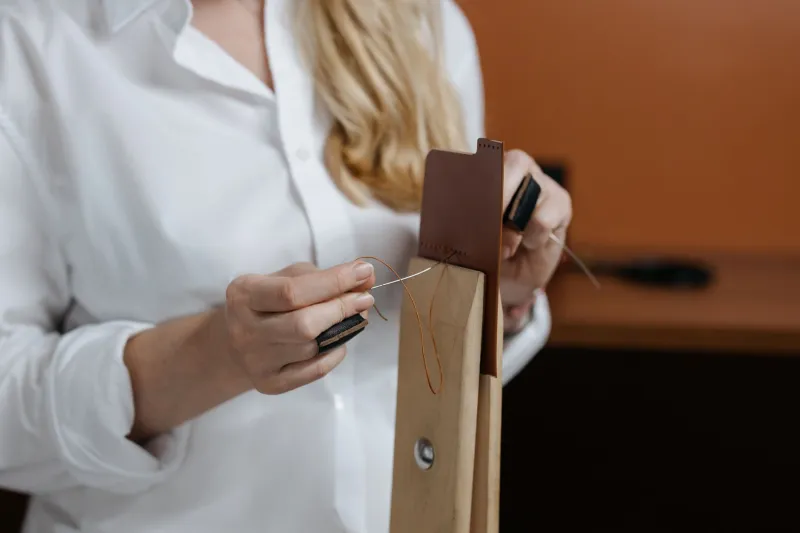
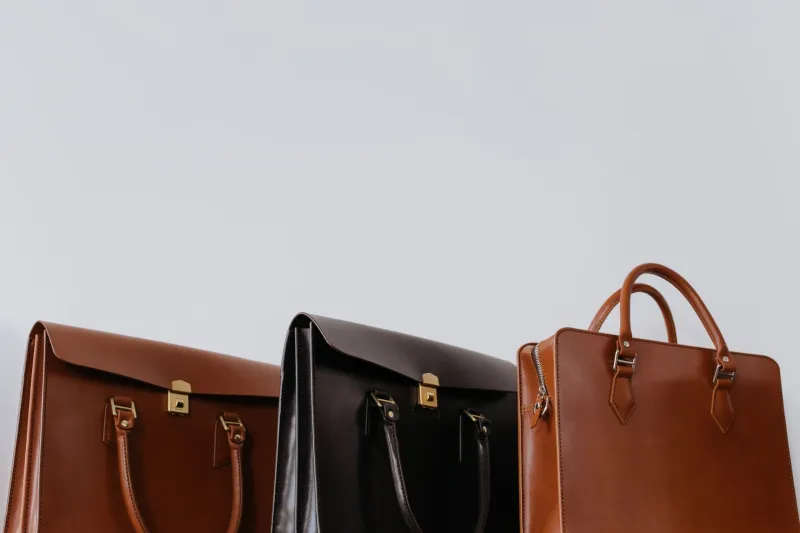
Consider two purchasing scenarios. In the first, a consumer buys ten leather-look tote bags over the course of five years, spending an average of $65 each. The total outlay: $650. Each bag lasts, optimistically, six months before the faux-leather peels, the stitching separates, or the hardware tarnishes beyond salvage. In the second scenario, the same consumer invests $595 in a single, full-grain leather tote from a heritage brand — one constructed with hand-stitched seams, solid brass hardware, and vegetable-tanned leather that develops a patina over time.
At the end of five years, the first consumer has spent $650 and has nothing of value to show for it. The second consumer still carries the same bag — now richer in character, broken in perfectly to the contours of daily use, and worth, in many cases, close to what was originally paid for it on the resale market. The cost-per-use calculation is not even close.
This is the arithmetic that fast fashion does not want you to run. It is also the arithmetic that defines the investment piece mindset: the understanding that price and cost are not the same thing.
The Psychology of Ownership: Why One Great Thing Feels Better Than Ten Mediocre Ones
Beyond the spreadsheet, there is something less quantifiable but equally compelling about owning a single, exceptional object. Psychologists who study consumer behavior have long noted the phenomenon of "clutter fatigue" — the low-grade dissatisfaction that accumulates when we surround ourselves with things we do not truly value. A closet stuffed with disposable accessories rarely produces a sense of abundance. More often, it produces noise.
Contrast that with the experience of reaching for the same beautifully made leather bag every morning. There is a quiet confidence that comes from knowing your accessories are not merely adequate but genuinely excellent. It is the difference between wearing something and carrying something — between a prop and a companion.
Owners of heirloom-quality leather goods frequently describe their pieces in almost relational terms: the bag that has traveled with them across three jobs and two cities, the wallet that was a gift on a milestone birthday and has since become inseparable from their sense of self. These are not sentimental exaggerations. They are the natural result of investing in something built to absorb a life.
The Cultural Reset: Pushing Back Against Disposable Trends
American consumer culture has spent the better part of four decades optimizing for volume and novelty. The rise of fast fashion in the 1990s, followed by the explosion of e-commerce in the 2000s, created an environment in which the newest thing was always just one click away — and always cheaper than it had any right to be. The hidden costs of that model (environmental degradation, exploited labor, mountains of landfill waste) are increasingly difficult to ignore.
A quiet but meaningful counter-movement has taken root. Younger American consumers — particularly those in their late twenties and thirties who came of age during the 2008 financial crisis — have developed a sharper eye for value and a growing skepticism of disposability. They are drawn to brands with legible supply chains, materials with documented provenance, and products that carry a story worth telling. In this context, a well-crafted leather bag is not merely an accessory. It is a statement of values.
Choosing one iconic piece over ten forgettable ones is, at its core, a form of cultural resistance. It says, quietly but clearly, that you are not interested in playing the turnover game — that you understand the difference between fashion and style, and that you have chosen the latter.
How Iconic Leather Pieces Appreciate in Meaning — and Market Value
It is worth noting that the investment case for quality leather goods extends beyond personal use. Certain categories of leather accessories — structured handbags from heritage American and European houses, well-maintained briefcases, and limited-edition small leather goods — have demonstrated genuine market resilience on the secondary market. Platforms dedicated to authenticated pre-owned luxury goods have seen sustained growth, with quality leather pieces often retaining 60 to 80 percent of their original retail value years after purchase.
More broadly, leather goods accrue what might be called cultural capital over time. A bag that was well-made in 1995 does not look dated in the way a fast-fashion piece from the same era would. Full-grain leather, properly cared for, tells a story of use that synthetic materials simply cannot replicate. The scuffs and softening of genuine leather are not signs of deterioration — they are a record of a life well-lived.
Making the Shift: Practical Guidance for the Investment-Minded Buyer
Adopting the investment piece mindset does not require an overnight overhaul of your wardrobe or your budget. It begins with a single, deliberate decision. Before your next accessory purchase — however small — pause and ask a different set of questions. Not "Is this affordable?" but "Is this worth owning for a decade?" Not "Does this look good today?" but "Will this look even better in five years?"
Seek out brands that are transparent about their materials and manufacturing processes. Look for full-grain or top-grain leather rather than bonded or corrected-grain alternatives. Examine stitching, hardware weight, and lining quality. Ask whether the brand offers repair services — a hallmark of makers who stand behind what they produce.
Then buy the one thing you will reach for every day, and reach for it without reservation.
The investment piece mindset is not about spending more. It is about spending once — on something that earns its place in your life rather than simply filling a gap in your closet. In a market saturated with the disposable, that kind of permanence is, quietly, the most radical choice you can make.